January 31, 2011

Introducing: Our Health Resource Room!

By Tonya Hamilton of the DCPCA Health Corps, along with Liz Nafziger of the Mennonite Volunteer Service.

One of the most exciting rooms in our new medical clinic doesn’t have any medical equipment in it. Instead, it’s filled with computers!

Ri, an Avodah corps member, sits in our new health resource room.

We believe that access to the internet is a critical component of health care today. After all, the pursuit of healthy living is really an educational process. Today, immense sources of knowledge are available to people -- if they are able to access it. With our new health resource room, we can now facilitate that access on site here at Bread for the City.

As of last Thursday, the room was open for use!

Here’s how it will work: when clients meet with our providers, they’ll have conversations about health issues that they’ll want to follow up on afterwards. Clients can then visit the health resource room while waiting for their lab results or vaccinations -- or even just on their own time. There they can browse the internet and print out relevant information for reference later.

The resource room will also always have a friendly face on hand -- volunteers who can provide guidance in using computers and browsing the internet. Right now, we’re happy to have the involvement of supervolunteer Marie Hoffman, as well as students from George Washington’s ISCOPES program.

“To my knowledge, there aren’t many clinics out there that have a resource room like this,” says Marie. “And that’s stunning to think that we’re ahead of the curve. But it seems so obviously important!”

On its first day open, about 6 clients came through to use the facility. (We expect that number to increase in the future.) While waiting for labs I asked clients would they like to see what’s in the new health resource room, most were surprised and excited. One lady was initially scared to touch the mouse because she had never touched a computer before, and she didn’t want to break it. After I briefly orienting her with the basics, she grabbed the mouse and jumped right in. Together, we navigated Medline Plus to find articles and even instructional videos. She was stunned at all the things she could learn.

In the rest of the day, I helped people interested in learning more about warts, asthma, blood clots, and dietary guidelines for specific medication. One man, after researching his dental issues for a few moments, asked us to help him practice the questions he would ask his dentist during an upcoming appointment. Several patients were even more interested in researching the health issues that affect their loved ones.

The information one finds on the internet can’t truly substitute from the care people receive in our clinic, but it can empower clients to take responsibility for potentially-complicated health issues like hypertension into their own hands. It’s a great complement to our new computer literacy classes, and an opportunity to generate discussion -- in the resource room and in the community at large -- about how we live healthfully.

We look forward to sharing that discussion with you!

Tonya Hamilton

January 27, 2011

Federal Nutrition Programs 101

This post is the second in a series from Bread for the City intern Allison Burket exploring the basics of food, hunger, and politics in the District.


As I explored in my previous post, hunger and food insecurity are realities for a startling number of DC residents. Not surprisingly, the ranks have grown in the wake of our economic crisis, and our federal safety net has played an essential part in making sure families can put food on the table during tough times. For that reason, an important piece of building a more food secure DC is making sure eligible DC residents are accessing these programs and that those participants have healthy and affordable options within reach.

The Supplemental Nutrition Assistance Program (SNAP), formerly the food stamp program, provides food assistance to low-income households across the country. Families and individuals receive monthly benefits on an electronic benefit transfer (EBT) card that acts like a debit card and can be used in most grocery stores and retailers to buy food items (excluding alcoholic beverages, household supplies, and prepared meals).

By far the largest of the federal nutrition programs, over 42.9 million Americans received benefits in September 2010, including 128,759 in the District, with average monthly benefits of about $100 per person or about $227 per household around the country. Until recently, all families and individuals with less than 130% of the poverty level in monthly income could apply, as long as they had less than $2,000 in their bank account. “The Food Stamp Expansion Act,” implemented last spring, raised eligibility for DC residents to 200% of the poverty level ($21,600 a year for a one-person household and $44,100 a year for a household of four) and eliminated the $2,000 asset cap. (To apply for SNAP in DC, visit your nearest Income Maintenance Administration office. To find out which service center to go to, call 202-698-3900.)

Healthy Affordable Food For All: DC Food Finder
Uploaded with Skitch!

Several federal programs focus on ensuring that children receive the nutrition they need to support healthy growth, brain development, and eating habits for life. First, the Supplemental Nutrition Program for Women, Infants, and Children (commonly known as WIC), is a preventative program designed to ensure adequate and consistent nutrition for pregnant women, new mothers, babies and children up to age 5. Participants (17,000 in the District this month) receive vouchers through local WIC clinics to buy healthy foods. Nutritional counseling, health screening and referrals, and other nutrition services are available at local clinics through this program. WIC is funded federally and administered locally through the Community Health Administration of the DC Department of Health.

Millions of kids elementary age and older count on meals served in school as their most reliable daily meal. The National School Lunch and Breakfast Programs are another pair of federally funded child nutrition programs designed to ensure students have enough food in their bellies to focus and thrive at school. Through the DC Office of the State Superintendent of Education (OSSE), schools are reimbursed for offering meal options that meet certain federal nutrition standards. Participating schools are required to offer free and reduced-price meals to low-income children and to implement wellness policies that promote healthy school environments. These requirements and federal nutrition standards were recently updated as part of the Healthy, Hunger Free Kids Act of 2010, which also added 6 cents per meal to the level of funding schools receive. In DC, the groundbreaking Healthy Schools Act takes a number of steps to promote better school meals - offering free school breakfast for all students, incentivizing healthier meals, supporting farm to school programs, and more.

Kids can also receive meals at child care and child development centers through the Child and Adult Care Food Program (CACFP). In DC, all child development centers must serve snacks and supper options that meet certain meal quality standards, or must require that families bring meals that comply with those standards. The CACFP program also funds meals for elderly or functionally-impaired adults at adult care centers.

Beyond CACFP, a collection of additional programs support seniors and persons with disabilities. The Commodity Supplemental Food Program (CSFP) provides eligible seniors with a monthly food package, and the Senior Farmer’s Market Nutrition Program (FMNP) offers eligible seniors $30 in coupons to purchase fresh fruits and veggies at farmer’s markets. Other programs such as Meals with Friends, which offers group meals for seniors at local wellness centers, and Homebound Meals are DC-specific programs administered by the DC Office on Aging.

Beyond the Benefits

The good news for the District is that not only do these federal benefits protect families from the detrimental impacts of hunger and undernutrition, but they bring in funds that then recirculate in DC’s economy. According to Moody's Analytics, every $1 of SNAP benefits spent in the community generates $1.85 in local economic activity. Unfortunately, this means when eligible households are not receiving their entitled benefits, DC misses out twice. As of fall 2009, approximately 18,500 eligible individuals were not enrolled in SNAP. For some, language access is a barrier; many others don’t know that they are eligible, have trouble navigating IMA, or don’t think the benefits are worth the time it takes to apply and recertify.

Ensuring sufficient access to these programs is the work of organizations like DC Hunger Solutions, whose report How to Get Food in DC outlines in plain language who is eligible for what program and what you have to do to apply. (DC Hunger Solutions also provides print copies of this report - call (202) 986-2200 ext. 3041) The DC Food Finder, a project of several different organizations, includes information on how and where to access and apply for your federal benefits, as well as a searchable map of affordable food options.

Making sure these federal programs guarantee access to healthy and nutritious foods is another story, however. Are the meals that are served truly healthy and nutritious? Can SNAP and WIC benefits be used at farmers markets and grocery stores? How can the DC government improve these programs? Where do we start administratively or legislatively to support a food secure DC? Join me next time to find out!

January 26, 2011

The most important program that you never knew we had.

Bread for the City is contracted by the DC Department of Mental Health to provide payee services to 800 of the Department’s consumers -- people who struggle with chronic mental illness, and who need assistance with their financial matters.

Through the Rep Payee program, we receive our clients’ benefit deposits (i.e. their Social Security checks); then we use that money to pay rent and utilities, food and medical costs, and personal expenses. Each client’s spending is guided by an individualized budget plan created in collaboration with the clients’ mental health treatment team and our staff. Each week about 200 clients pick up expense checks at one of Bread’s centers, with many more checks mailed out across the city. Each month approximately $670,000 flows through the Representative Payee Program - more than $8 million a year! (That may sound like a lot, but it works out to be just about $10,000 for each client in a year.)

Aside from managing bank accounts, we also work to ensure that our clients can continue to receive these benefits. The population we serve experiences frequent changes in personal circumstances -- including moves and hospitalizations that may affect benefit eligibility. Each such event must be properly documented and reported to comply with complicated rules. Our biweekly trips to the Social Security Administration offices allow us to keep client records up-to-date, thus avoiding unnecessary benefit suspensions or over-payments. This, in turn, ensures a stable environment for our clients. Should they need other kinds of assistance, we can also connect them with Bread for the City services like food, legal and medical care.

Our case managers and accountants ensure that rent is paid on time and phone and electricity services stay up and running. And by working with us to devise a workable budget, our clients can ultimately decrease their reliance on service agencies generally – and build towards greater degrees of independence. They may even be able to save some money for a special shopping trip for winter clothes, or for birthday presents for family members. Any way you stretch it, a $674 Supplemental Security Income payment is not easy to live off of in a pricey city like Washington, DC, but with the help of the Rep Payee Program, many of our clients can find stability and happiness.

January 25, 2011

Access to Housing: our new program

Last week you read a bit about affordable housing options (and the lack thereof) in DC. We see people every day who are homeless or living in precarious housing situations and are having trouble finding viable housing options. While we don't build more affordable housing here at Bread for the City, we can help our clients access the affordable housing that already exists.


So our Social Services department has started a new initiative to do just that.

The Housing Access Program (HAP) started in September of last year. It focuses on Site-Based Section 8, the privately owned HUD (Housing and Urban Development) subsidized apartment buildings scattered throughout the city. Like DCHA housing, these buildings offer apartments for rent at 30% of the tenant’s income. Each building is privately owned, however, meaning that each one has a separate application process, waiting list, and criteria. Some require that all residents be age 62 and over and some require that residents have a documented disability. Others do not carry any of these restrictions.

Just for the sake of argument, let’s assume that a client is neither disabled nor over 62. This same client is lucky enough to be literate and tech savvy, have access to a computer and phone, and have the time and money to visit multiple apartment buildings.

They might go to the HUD website to search for an apartment, and that search would yield a list of 110 Site-Based Section 8 buildings. The list probably hasn’t been updated in a long time, and in any case it doesn’t indicate whether properties have open waiting lists. They could try to email, call, or visit every building, which would take weeks or months, only to eventually realize that only 5 of those 110 buildings are open, accepting new applications, and don’t require applicants to be elderly or disabled.

Our goal with the Housing Access Program is to make this whole process more efficient. Through the program, we keep an internal database of all the properties that are accepting new applications, including things like the application itself, income requirements, and a list of necessary documents (photo ID, birth certificate, Social Security card, and proof of income, to name a few). We can then provide clients with a customized list of housing options for which they are eligible, making their search much easier. This customized list alone can be very helpful for anyone undertaking a broad search for housing.

The Housing Access Program, however, is specially designed to assist individuals with limited literacy skills, limited mobility, limited transportation funds, and/or are living with chronic medical or mental health concerns. For them, it is an invaluable resource to have a case manager assist in completing the applications and work with them to gather necessary documents and complete and submit these applications. So far, we have assisted clients in completing and submitting over 100 applications, and more are being done each day.

Our work doesn’t end with the submission of the application. We've also started offering tours for clients to visit properties and drop their applications off in person -- an important aspect of finding a safe, healthy place to live. And while our clients wait for their names to rise to the top of the waitlists, we refer them to other agencies to help repair their credit, which is an important factor once their applications for housing are being evaluated. Once approved for housing, we can then assist our clients with securing furniture and other needed household items.

This is not a short-term solution. While not as daunting as the waiting list at the DC Housing Authority (which is currently at 31,777 households), none of these buildings have vacant units. Many of our HAP clients will still have to wait for years before they attain housing. But not all of them: we have already seen 4 clients housed through the HAP program (and no clients housed through DCHA during that time period).

We are very excited about this concerted effort to make the best use of our resources for helping clients access affordable housing.

January 24, 2011

Work with us!

Hey so there's a bunch of opportunities to work with us! Check them out below.


Clinical Reporting Analyst

This job is an opportunity to develop and implement systems for clinical reporting at Bread for the City. Work involves managing our database effectively and efficiently, in order to provide accurate information about the work of our medical clinic and social service providers. You will oversee the day-to-day operations, improve use of our Electronic Medical Records system, and become the champion of Quality Improvement projects. The analyst will report to the Special Projects Manager, and work closely with the CFO, Director of the Medical Clinic, and other managers.

Duties:

  • Lead all work related to reporting from our electronic medical record system. Manage the full reporting process including the design, development, analysis, testing, implementation, documentation and maintenance of reports, utilizing Microsoft Access, pivot tables, SQLyog and eClinicalWorks systems.
  • Execute weekly, bi-monthly, bi-annual, and ad-hoc reports as needed.
  • Maintain and develop integrity of clinic data.
  • Provide basic end-user training and support related to reports and data.
  • Works with clinic teams to develop solutions to clinical quality and safety issues to improve care delivered to our patients and community.
  • Assist in prioritizing database enhancements and reporting functions.

Required Skills
  • Bachelor’s Degree or demonstrated work experience in data management
  • Proficient with Microsoft Suite, particularly Excel
  • General comfort with learning new computer programs and databases
  • Proven abilities to manage multiple projects in a fast-paced low-barrier environment
  • Excellent verbal and written communication skills
  • A demonstrated ability to use one or more data programs (Microsoft Access, SQL, SPSS, Stata, etc.)
  • Ability and comfort with being a team leader, not just a team player.
  • Commitment to serving low-income and vulnerable populations.

Desired Skills:
  • The Analyst must be able to analyze and package data results as relevant to different audiences
  • Advanced degree or equivalent experience with biostatistics and measurement and evaluation.
Interested candidates should send a resume and cover letter [.pdf preferred] to Jessie Posilkin at jposilkin[at]breadforthecity[dot]org with “Reporting Analyst Job” in the subject header.


Spanish Language Social Worker (Northwest)

The Social Services Social Worker is primarily responsible for a small case-load of clients to address both their urgent and long-term needs. The position involves a great deal of contact with clients, as well as calls, letters and face-to-face visits with a variety of private and public agencies on behalf of the client.

Responsibilities for this position include:

  • Maintain caseload of 20-25 case management and/or counseling clients and provide all appropriate services.
  • Conduct individual intake assessments with new and recertifying clients in order to identify specific needs and maintain eligibility for Bread for the City programs and numerous public benefits.
  • Conduct individual psychosocial assessments for clients wishing to engage in case management and/or counseling services.
  • Conduct brief assessments and interventions during walk-in shifts.
  • Coordinate completion of client applications for Social Security Disability benefits and conduct follow up meetings with clients as appropriate.
  • Provide information and referrals to appropriate programs to help clients achieve goals.
  • Develop and maintain expertise in public and private resources applicable to the low-income population served by the agency.
  • Advocate on behalf of clients by attending relevant community meetings, assisting partner agencies in their efforts, and communicating with local and federal agencies.

Qualifications and skills:
This position requires an MSW from an accredited university and the applicant must be licensed or license eligible. Fluency in Spanish is required. Must have strong interpersonal skills and an ability to work with a diverse group of people. Excellent organizational skills, listening and writing skills, and the ability to manage multiple projects simultaneously are a must. Patience, perseverance, and a capacity and interest to learn about government programs are helpful. The applicant should be committed to working for social justice. Flexibility, optimism, a sense of humor, and a cooperative spirit in the face of hectic working conditions are all very helpful.

Please send cover letter and resume to:
Tracy Knight, LICSW, Social Services Director, NW Center, at tknight[at]breadforthecity[dot]org.


Rooftop Garden Intern

Bread for the City is growing gardens on the roofs of our Southeast and Northwest Centers! These gardesn will soon be a space for community learning about sustainable food sources, and the food grown in the gardens will supplement the groceries we give out in our food pantry. Read more about it on our blog: http://breadforthecity.blogspot.com/2010/08/rooftop-garden-one-pot-at-time.html

Description and Responsibilities: The Rooftop Garden Intern will manage the growth of the Southeast Center's rooftop container garden, and will assist with the development of the Northwest Center's larger rooftop garden. The volunteer will reach out to donors and organizations for continued support through in-kind donations; recruit clients and volunteers to water and care for the plants currently growing on the roof; and work with our Nutrition Consultant to plan for programming events to take place in the garden.

The Rooftop Garden Intern will need to work on the garden daily or at least every other day, excluding weekends, in order to keep the plants healthy, for a total of 10-15 hours per week.This position is unpaid.

Requirements:

  • Have a passion for broadening access to healthy foods in the District;
  • Have a knack for or interest in gardening and growing potted vegetables;
  • Be responsible, dependable, and consistent;
  • Be able to communicate with a wide variety of people, from clients to donors;
  • Have a desire for social justice.

To apply, contact Erin Garnaas-Holmes at eholmes[at]breadforthecity[dot]org.


Development Intern

Duties and responsibilities:
The Development Intern will work with all members of the development staff. The duties of the Development Intern will be both project-based and administrative.

The Development Intern will be responsible for the following:

  • Support the planning and execution of major fundraising events
  • Develop and write posts on many different topics for the Beyond Bread blog
  • Compose and file gift acknowledgement letters
  • Update and maintain data in Raiser's Edge fundraising software
  • Maintain the supply of information packs
  • Assist with other projects as they arise, including research projects, administrative projects, and communications projects


In addition to these duties, the Development Intern is encouraged to introduce new ideas for how our fundraising program could be further developed or expanded, as well as take the initiative in suggesting projects that incorporate the Development Intern's skills and interests and will benefit the development office and Bread for the City as a whole.

Characteristics and skills needed:
This position requires strong written and oral communication skills, and an ability to work well with all types of people. Organizational skills and an attention to detail are a must, as well as the ability to work independently within the framework of a given project. Flexibility, optimism and a cooperative spirit in a sometimes hectic working environment are all very helpful characteristics. Above all, a Bread for the City Intern must have a commitment to social justice. This position is unpaid.

Schedule:
Candidate is asked to make at least a three month commitment to work a minimum of fifteen hours weekly (days and hours are flexible).

Contact Ryan Hill at rhill[at]breadforthecity[dot]org to apply.

January 21, 2011

Tickets on sale now for Art With A Heart

Tickets are on sale now for our annual benefit gala, Art With a Heart!!


Mark your calendars: March 10th at 6pm, at 300 New Jersey Avenue NW. Enjoy this evening of music, art, friends, food and fun. Silent and live auctions, open bar and lots of Bread for the City's family on hand to celebrate!


Please note: For $500, guests will receive two tickets and your name listed as a sponsor in our program! Inquire about special sponsorship opportunities with me, via email or at 202.386.7613.

It's the 21st Art With a Heart! Will this be the best one ever?

January 20, 2011

Affordable Housing: What Does it Mean, Where Did it Go?

For the orientation of new Bread for the City staff, volunteers, and interns, Wendy Guyton (Social Services) and Rebecca Lindhurst (Legal Clinic) teamed up to create a Powerpoint presentation about affordable housing in DC. I found it very helpful, and I think you will too.
Affordable Housing Crisis in the District of Columbia


Some of the facts that really jumped out at me:

  • Housing is considered affordable if it is 30% of a household's budget. One in five DC residents have severe housing affordability problems, meaning they spend more than half of their income on housing.
  • "Fair Market Rent" for a two-bedroom in DC is $1,494 a month. But households using safety net programs bring home far less: $674 for SSI, $270 for Interim Disability Assistance, and $428 for a mother and two children on TANF.
  • A minimum wage worker ($8.25/hr in DC) must work approximately 139 hours per week to afford a 2-bedroom apartment at Fair Market Rent.
  • In the last ten years, DC has lost one-third of its affordable housing stock.
  • There are 31,777 names on the waiting list for affordable housing. Of them, 16,000 are designated as homeless.
While statistics and budget numbers help us understand the scope of the problem, it's stories that really motivate people to take action. In the next few months, we'll publish blog posts from members of our new Client Advisory Board who have struggled to find and maintain safe, affordable housing. We'll also tell you about the new efforts of Social Services and the Legal Clinic, and the budget decisions facing the city.

January 19, 2011

Going digital: more learning with computers and the internet

When Dr. Randi asked me to pick up where our Computer Class left off last year, I was excited. I’ve logged some hours teaching my parents basic computer skills, and I even enjoyed it -- so I was eager to participate in this project. I even offered to help develop a class to be taught in Spanish.

Once a week during the month of November we met with a group of students, ranging in size from two to eleven people. Being adults and never having any kind of exposure to a computer, our students were very eager to learn. First, we covered basic computer hardware and then moved on to explore topics including the Internet, search engines, and what makes a website reliable. Toward the end of the month we focused specifically on diabetes and the process of researching health information online.

I’d say that the things our students were most interested in learning about were the things that their children are using, like Facebook and photo sharing sites. But we had an agenda, and stayed focused on learning how to navigate the Internet to find health information.

The main website that we used was Medline Plus, to search for specific information on health topics. It is a great teaching tool because it provides easy access to tutorials and offers easy to understand material via print and video. We even had them compare Medline Plus (which is published by the National Library of Medicine) with other less authoritative websites (like those produced by commercial or amateur parties), so that they could consider the trustworthiness of internet sources.

By the end, participants no longer approached the computer with timidity. The students realized that it takes practice to learn something new, but that they also have incredible potential and will continue to improve their computer skills as they continue to practice. And they were proud.

Students from our computer literacy class, on the day of their "graduation."

“I’m coming back for classes in January!” was often repeated during our last session, when we awarded them with a Certificate of Achievement signed by Dr. Randi. In the English speaking group, our graduation party turned into a true celebration as one of the students had decided to cook food for the whole class!

Student feedback was generally positive, but it also voiced the need to focus on another aspect of computer and Internet use: how to set up and use an email account. Maria Hernandez noted, “these days, everyone is asking you for your telephone number and your email.” It’s important, then for the students to know how to create email accounts so that they can take advantage of job opportunities. “I hope to maintain employment,” LaDonna Grinage said, "and to stay in contact with family and friends, too." So we will be sure to incorporate email as a primary focus of our future classes.

In the future, as we settle in to our expanded Northwest Center, we’ll have access to a new conference room and even better equipment -- much more appropriate for a curriculum like this. People are already signing up even though we haven’t announced dates yet! It’s a service that we hope to provide more of in the future.

January 18, 2011

Number Crunching & Food Security 101

This post is the first in a series from Bread for the City intern Allison Burket exploring the basics of food, hunger, and politics in the District.


What’s up with food and hunger in DC? In what ways is DC “food insecure”?

First, some figures. According to the USDA’s analysis, over one in eight families in DC classifies as “food insecure,” of not having sufficient access to nutritious food over the course of a year. Of all households in DC with children, 40.6 percent have had times when funds were not sufficient to put food on the table. The Capital Area Food Bank, which serves over 478,100 local residents, released its own comprehensive profile of hunger in DC in 2010. They find that 1 in 3 DC residents is at risk of or experiencing hunger. The food bank has seen a 25 percent increase in food clients in recent years.

Economic hard times in the city exacerbate the impact of an industrialized food system in which lower-quality foods are produced on the cheap. Diseases related to diet and lifestyle are at an all-time high across the country. In DC, where the obesity rate is 22.2% and levels of residents with hypertension reach beyond 28%, these challenges are disproportionately felt in low-income communities and communities of color. For example, Ward 8, which is 92% Black or African American, has a median income of around $25,000 and an obesity rate of 41.9%. This can be compared to Ward 3’s 84% white population with median income of $72,000 and 11.7% obesity rate. (For more on obesity in DC, see the report from the DC Department of Health.)

Communities that are already struggling to afford fresh and nutritious food might not be able to find these staples in their own neighborhoods. So-called “food deserts” result from policies and development practices that have left many lower-income neighborhoods without access to full-service grocery stores or alternative sources of fresh food. DC Hunger Solutions has led the research on the “grocery gap” phenomenon in a 2010 report that identifies the areas in the city, particularly Wards 7 and 8, most impacted by uneven distribution of full-service grocery stores and draws connections to issues of unemployment, obesity, and the local economy. The DC government has launched an effort to combat this phenomenon, though based on experiences with similar initiatives in New York and Pennsylvania, reducing food deserts alone is insufficient to bring down obesity rates.

More than just hunger at a given moment in time, these studies capture the impact of what is increasingly recognized as a broken food system. If recent headlines are any indication, it’s clear that the factors affecting our ability to feed ourselves in a way that is healthy, equitable, and sustainable are complicated and difficult to track, predict, or control: housing and development trends in DC make it difficult for DC residents to access food pantries and federal nutrition programs; battles on the national level over funding for school lunches and for SNAP benefits have been drawn-out and wonky; though farmers and consumer groups across the country have recently been putting up quite a fight, corporate concentration across the food and agriculture sectors continues to result in lower prices for farmers and higher prices for consumers.

So what would it mean to talk about “food security” in DC? According to the standard definition, a community is “food secure” when all residents obtain a “safe, culturally acceptable, nutritionally adequate diet through a sustainable food system that maximizes community self-reliance and social justice.” This perspective is useful in that it considers all the factors that influence the availability, cost, and quality of food to area households, but gosh, trying to think about all those factors and how to make them work better for DC can be a little overwhelming.

The good news is that, while there’s a lot of work to be done, there are a lot of folks already doing it. Recent developments at Bread for the City, as well as a range of stellar projects, programs, and legislative victories captured on the DC Food For All blog, lead me to believe that DC can take the power of making healthy, sustainable food choices into its own hands.

Check in next week as I begin to explore the federal nutrition programs serving District residents!

January 13, 2011

Our new center: grandly opened

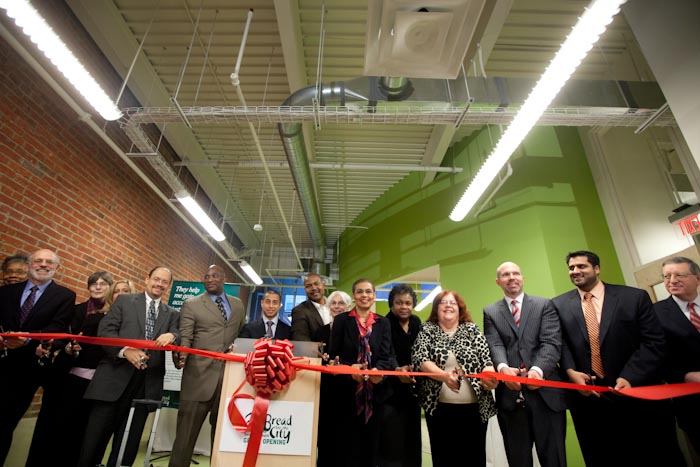
Cutting the Ribbon!

What a way to open the new year.

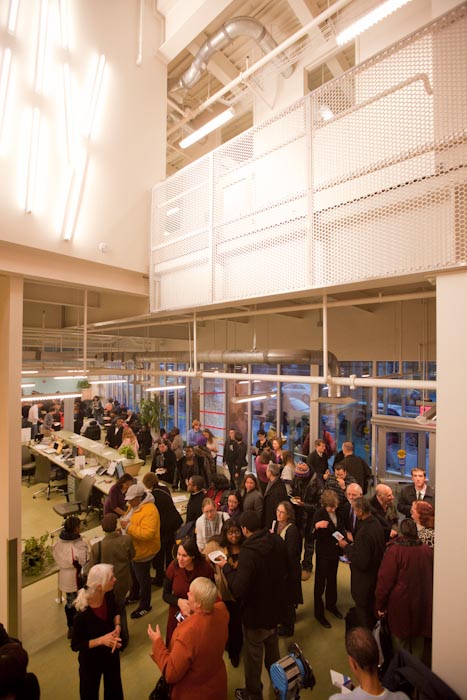
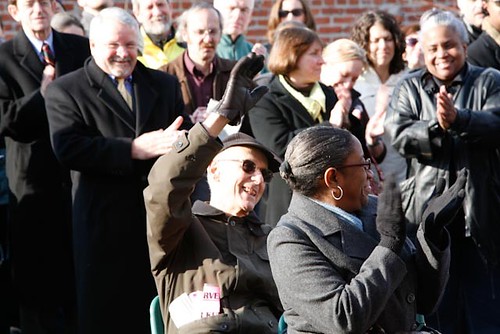
For more than fifteen years of my time here at Bread for the City, we've harbored a dream of expanding our Northwest Center. Last Friday, more than 300 people joined us to celebrate the dream coming true.


The lobby and grand hallway of the new Northwest Center facility was packed to the walls with Bread for the City's community -- donors, volunteers, clients, neighbors, civic leaders, and more. After many cheers, much laughter, and quite a few emotional speeches, we cut the ribbon on this wonderful new space.

I cannot be prouder of the great team that made this possible -- including the District of Columbia Primary Care Association, the Department of Health, our legal team of pro bono counsel from law firms like DLA Piper, our Board of Directors, and thousands of donors like you.

And it's not too late for you to become a part of our dream; if you haven't yet donated to the Capital Campaign, please give today. All gifts of $500 or more will be recognized on a special Honor Wall that leads to our food pantry.

I know many of you weren't able to make it out last Friday. Volunteer photographer Jessica Del Vecchio took some photos that we'd like to share with you - please see below. I am also available to give personal tours; to schedule one, just email me at gjones [at] breadforthecity [dot] org.


Thanks again to everyone who joined us!


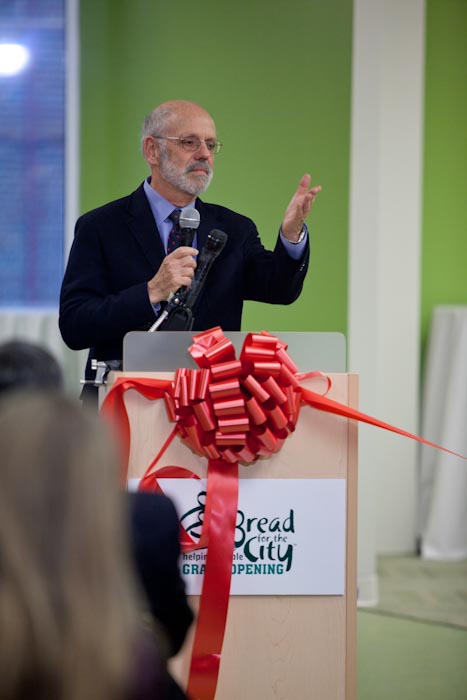
Bread for the City Board President Mark Aron


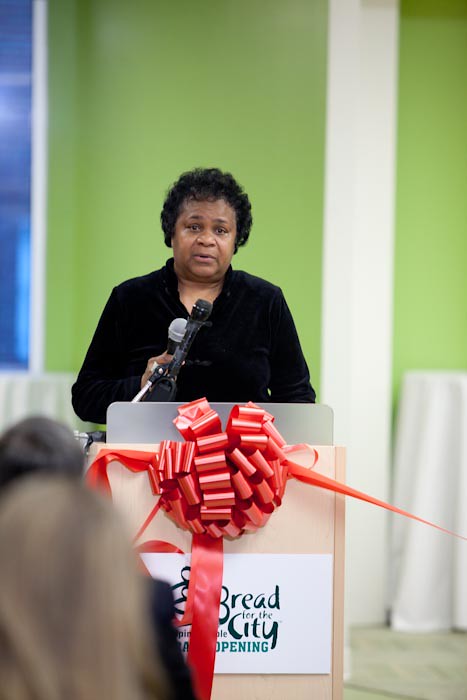
Bread for the City patient and Client Advisory Board Member Dorothy Kemp


Congresswoman Eleanor Holmes Norton


Local phenom Christylez Bacon performs for the crowd.


The crowd mingles in the main lobby.


See the full set of photos here.


See press coverage here, here, and here.


And make a donation to the expansion here.

January 7, 2011

Our New Medical Home

Today, Bread for the City welcomes the community into our expanded Northwest Center for our Grand Opening. (4pm sharp!) In anticipation, we asked our medical clinic director, Dr. Randi, to share her thoughts on the new space. (And if you haven't already, check out the CNN-produced special report on Dr. Randi and the clinic!)


Dr. Randi writes:

When I started working at Zacchaeus Free Medical Clinic (which eventually merged with its neighbor and partner organization, Bread for the City), we worked out of a basement. And you can say that we "made do" -- but of course it wasn't ideal.

In a community health clinic, space is important. It's one thing to be able to offer quality consultation and treatment to our clients, but it's also vitally important to offer it in an environment that is spacious, clean and organized. Such an environment sets a tone of mutual respect, and conveys a sense of responsibility for the health of individuals and community alike.

Our original clinic was welcoming in that it felt a bit like home -- it was crowded and it felt productive and high energy, if a little chaotic. Sometimes that heightened energy meant tempers would flare up due to frustration, the worry that you were not going to be heard. Many of our clients already live in overcrowded conditions that are stressful and at times unhealthy; they walk in to our clinic already frustrated, not feeling well, stressed -- and they would often stand right by the desk, trying to ensure that no one would forget them. So for a long time, we knew we needed more space -- and not just because we were short on exam rooms.

We serve a very heterogeneous population: babies, frail elderly, active children and adults with a vast range of health conditions. Many patients have mental illness. Some people come to us intoxicated or high. Many new immigrants speaking a variety of languages. They all share one waiting room, they all belong to this medical home.

We designed our new clinic with all this in mind. We wanted to convey a certain message about health. Here, the atmosphere is calmer, which encourages patients to think about their own responsibility in their health. The waiting room is always spacious even when each seat is filled. The children have an area that is inviting and safe -- separated but at the same time part of the whole. Each exam room provides the privacy that is appropriate. The lab is off to the side. It’s all very quiet. You can see that it is less stressful for patients.

The staff was mostly hoping for updated equipment that works as it’s supposed to. And we got that; everyone is pleased. But the real surprise was the patients’ reaction to the new space.

The patients have been watching construction all through last year, curious about what will be inside. Now that they finally can come in, they typically walk up the stairs with a look of amazement and awe. From the beginning the tone has been set. I’ve noticed that people are markedly calmer and more patient; the space makes people feel good.

“I am 50 years old and you are my first doctor that knows me," a man told me on the first day we were open. "And to see this beautiful building makes me so happy.” He has been sober for the past 8 months; he says he is tired of feeling sorry for himself and ready to go look for a job. “This is my home and I am so proud of this new space.”

I am too.

—Dr. Randi Abramson

January 6, 2011

Thanks, Ben!

Thanks, Ben!

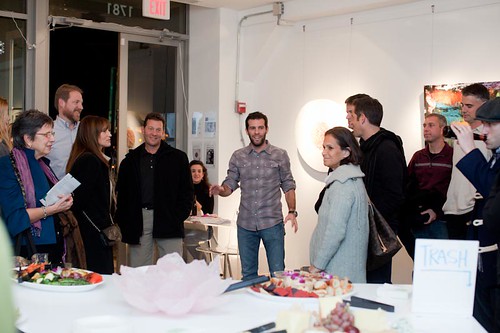
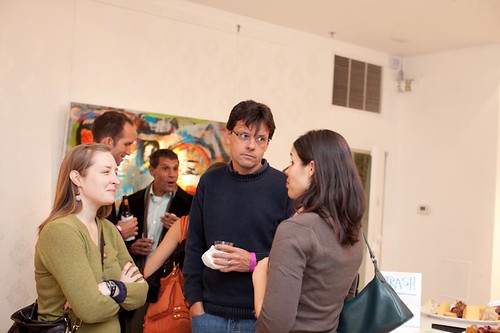
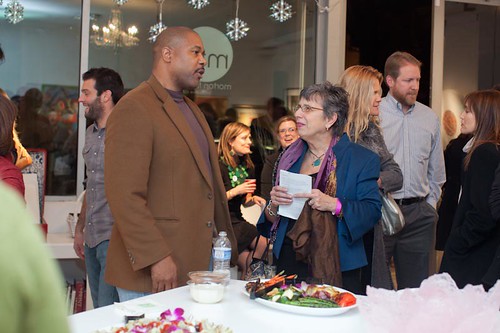
DC United’s Ben Olsen hosted another successful art show last night to benefit Bread for the City. Having organized this event so that he could “give back to the community that has given me so much,” Ben sold some of his own pieces, alongside works from the Redskin’s Chris Cooley, Susan Burnstine, Mike Dowley, Rosemary Feit Covey, Ben Ferry, Katri Hunter, Choichun Leung, Peter Loge, and Michael Weber.

The art show was co-hosted at Morton Fine Art, Stussy and Commonwealth, all along on Florida Avenue between 17th and 18th streets. Catering was provided by Occasions Catering, and drinks from 18th Amendment and Premier Distributors. It was truly a night of everyone coming together, bringing to the table what they had to offer, so that critical dollars could be raised for the poorest in our community.

The night was a huge success! Thanks to everyone for coming out. Our volunteer photographer, Jessica Delvecchio, took some great photos which we’ve uploaded to Flickr here. Check them out!


Executive Director George Jones with Jan Fenty

See the whole set of photos on Flickr here!

January 4, 2011

Hard to believe: decades of Bread

This week, as we prepare for our Grand Opening on Friday at 4pm, here at the expanded Northwest Center (1525 7th st NW), we've asked some longtime Bread for the City community members to share their reflections with us.

Below, former board member and longtime volunteer Roger Kuhn (pictured right, at our groundbreaking in 2009) reflects on the long road that we've traveled to this point. Thanks for your tireless years of service, Roger!


Standing in the stunning new building, in the midst of its vastness, its white walls, high ceilings, sound echoing around me, my mind wanders back to 1990, when I began volunteering at Bread for the City.

I did intake interviews in an old construction trailer, standing in the Popeye’s parking lot on 14th Street, just north of N. The trailer housed the entire food program -- staff, storage, delivery desk. Clients lined up on the ramp outside the trailer door, rain or shine. In the basement of a 3-story brick row house next door was the clothing room; the office was one flight up. Around the corner in another basement was a free medical clinic, run by an outfit called Zacchaeus Free Clinic.

Then came the first of Bread’s great leaps forward. Within two years, Zacchaeus added free legal services, and Bread and Zacchaeus jointly started a social service program, named for Jane Addams. Next, the church that owned the property on which the program operated announced that it was taking it over to build a large low- and moderate-income apartment complex. Bread and Zacchaeus both had to move, and they began looking for space to share.

What they found was an abandoned lumber warehouse on 7th Street, and as they revamped it and prepared to move, they began talk of merging, and I was invited to join the Board. That merger gave birth to the organization that exists today -- serving ten times as many clients out of what is now two buildings in Northwest and one in Southeast.

All this from a trailer in just 20 years. Hard to believe. What’s next?

--Roger Kuhn

January 2, 2011

My Journey Through Time: A Brief History of Shaw

My name is Makia Smith and I am a California native who spent this past semester interning at Bread for the City. While attending American University this fall through a student-exchange program, I was encouraged to learn and write about a community in DC. Given the location of Bread for the City’s Northwest Center (where I worked), I decided to delve into the history of the Shaw neighborhood.

The real story of Shaw begins just after the Civil War, when the neighborhood became a magnet for a wide range of new residents: whites, blacks, professionals, skilled and unskilled laborers. It was a destination, a place to establish roots. Many are familiar with Shaw’s most famous resident during its heyday: Duke Ellington.

In the 1960’s, the neighborhood began to change with crime on the rise in its formerly safe streets. Suddenly, Shaw was deemed a place to leave, and most of those who could, did. This downturn culminated in the riots of 1968, which completely devastated the social and economic well-being of the community for decades to come. By the end of the 60's, it was obvious that what had once exemplified the dignity and pride of the African American community was in heavy decline.

Throughout the 1970’s, Shaw had transformed into a poor community with high poverty and unemployment. In the 1980’s, new residents moved in on the hopes that the new Metrorail system would be followed shortly thereafter by a revitalization of the neighborhood. That didn’t happen. Instead, the neighborhood was forced to endure a new wave of crime that followed the explosion of the crack cocaine epidemic on the streets of DC. By the end of the 80’s, things were looking pretty bleak.

In 1991, Bread for the City and the Zacchaeus Free Medical Clinic moved into the neighborhood at the organization’s current home of 1525 Seventh Street. By 1995, the two entities merged under the single heading of Bread for the City. Willette Branch, a three-year veteran of BFC’s staff and long-time Shaw resident, believes that Bread for the City is a major boon to the community. She notes that, while pride often serves as a barrier to those who need help, Bread for the City is exceptional at helping individuals maintain their dignity while receiving the safety net services that they are desperately in need of.

Sekou “Koe” Murphy, Chief Financial Officer at Bread for the City, lived in Shaw while attending Howard University. He liked the neighborhood so much he eventually bought a home here. In short, he saw potential in the community. But at the same time, he also acknowledged the necessity of affordable housing in the community. Without it, many current residents would not be able to afford to live in Shaw, let alone anywhere else in DC—which is one of the costliest places to live in the United States.

Now that my time here at Bread for the City has come to an end, it has proved a fascinating experience to explore the history of this neighborhood where I’ve spent my last three months—its highs, its lows, and where it stands now. Given the encroachment of development (including the planned razing of the Kelsey Gardens apartments across the street from my office to make way for a condo complex), one wonders what changes lie in store for Shaw in the coming years. Likewise, one wonders if it will succeed in retaining its cultural ties as one of the nation’s most vibrant African American communities in the post-Civil War era. Only time will tell.

For more information about the history of the Shaw neighborhood, please check out our friends at Shaw Main Streets.

Photo of Broadway Theater (1949)—current home of Bread for the City’s expanded new facility—courtesy of the Wymer Photograph Collection, The Historical Society of Washington, DC/City Museum