June 30, 2009

Thank you for filling the food gap!

Wow!

Last week, we put the word out that our food pantry had gone over budget for the month of May by $10,360. In the time since then -- through this blog, our twitter feed, and email newsletter (to which you can subscribe by emailing us) -- we raised $11,500!

Awesome. And we're thrilled to announce that we'll soon have an opportunity to celebrate with you.


On July 16th at 6:30pm, at our Northwest Center (1525 7th Street), we're hosting our Second Annual Parking Lot Picnic.


Bread for the City staff, clients, volunteers, donors, and neighbors will join together for an evening of food and conversation. Food Pantry Director Ted Pringle will be working the grill, and Executive Director George Jones will share some highlights from this year and our big plans for next year.

Please join us. And please think for a moment about your friends and loved ones who would also like to learn about the work we do - invite them too!

You can RSVP for this event by email, or on Facebook.

As a fantastic final note of thanks for your outpouring of support, my staff has encouraged me to close this fundraising campaign off with some music that befits the triumphant occasion.


Fanfare - Final Fantasy III

June 29, 2009

As unemployment rises, so does TANF

Just three months ago, I reported on this blog the troubling news that Temporary Assistance for Needy Families (TANF) caseloads were declining in states across the country "despite a great rise in need." (Reasons for that included an array of barriers that prevent needy families from accessing the program.) Well, the Wall Street Journal reported Monday that this trend is at least partially reversing: the TANF program has increased enrollment in 23 of the 30 most populous states.

Here in DC, I can report that we’ve seen a 9% increase in TANF cases, from 14,665 in April 2008 to 16,017 in April 2009. So, more people are getting help through the welfare program. Unfortunately, it’s too soon to congratulate ourselves on a strong safety net, for two reasons.

First, these new numbers do not tell us whether the gap between need and enrollment is shrinking. A new study by Legal Momentum raises serious concerns about the failure of TANF to reach millions of families struggling with poverty. On the Huffington Post, Legal Momentum President Irasema Garza shares this telling fact:

“At its inception in 1996, TANF served 84 percent of eligible families; now, the program only reaches 40 percent of these very vulnerable women, children and families.”

This chart from their study (PDF here) illustrates the gap:

The second concern is unemployment. New estimates predict double-digit unemployment going into next year and in her Op-Ed in the NY Times, Barbara Ehrenreich pointed out the disproportionate loss of jobs for blue collar workers. Most states are faced with the perfect storm of rising caseloads and unemployment, coupled with decreased state spending (i.e. fewer staff).

It is more important than ever to make sure TANF recipients are engaged with efficient, effective programs with proven long-term impacts. As I pointed out here, more recipients should be connected to hard-skills training, subsidized employment, and education opportunities to help them get a good job (when the time comes when good jobs are plentifully available again).

June 26, 2009

Beyond Bread: DC Unemployment in Double Digits

~The rate of unemployment in DC has officially entered the double digits at 10.7 percent, putting it above the national average of 9.4 percent, regardless of the District’s steady supply of federal government jobs. While Washington is one of the cities in the US that is actually creating jobs during the Recession, the jobs that are created usually cater towards those more affluent with higher education residing in Virginia and Maryland. Unemployment is also grossly disproportionate in DC: Ward 3 had an unemployment rate of 2.5 percent in April while Ward 8, which encompasses Anacostia (where Bread for the City has its SE location) experienced a 23.3 percent unemployment rate.

~The Department of Housing and Community Development has received $33.7 million in stimulus funds from the Department of the Treasury’s American Recovery and Reinvestment Act to "spur the continued development of affordable housing units." Considering that, according to the DC Fiscal Policy Institute, the DHCD has over eighty housing projects that are stuck due to lack of funding, this grant may help to slightly alleviate the rising housing and foreclosure crises in DC as well as the negative effects these problems pose (pdf) to individuals, families and communities.

~We recently posted on our blog as well as on Twitter our need to fill the gap in our food budget for this past May. Thanks to many donors as well as the coverage of our financial situation on the Bloomingdale, DCBlogs, and Dining in DC blogs, we have been able to raise about $5,000 (!!) over the last three days, leaving us $5,360 away from reaching our goal. Thanks to all those who have helped, and please continue to donate to help us meet this challenge!

June 25, 2009

Update: We are filling the Food Gap!

Earlier this week I brought you some urgent news: our food pantry went way over budget last month. We called upon our community to help us fill the $10,360 food gap for May, and the response has been inspiring. We're half-way to our goal!

You can help us get the rest of the way there by making a gift today: http://www.breadforthecity.org/fillthefoodgap

Inspired by the swell of support for our pantry, Greg and Matt went down there this morning to shoot some video. Take a look here:


Quite simply, there's no one better than Ted Pringle at finding the cheapest healthy bulk food. So when Ted had to miss most of May for surgery, he couldn't scour the markets for the sweetest of deals - that really set us back. And that's on top of the fact that financial strain is sending more and more people to us seeking assistance.

Helen, a Bread for the City client, is also featured in the video. She shares a bit why she visits our food pantry from time to time. Helen works as a hairdresser (has since she was 9 years old!) and has 11 kids. In the summertime, with all the kids and grandkids around, she needs help getting food on the table. Greg and Matt helped her carry about five full bags of free groceries to her car.

We help about 5,000 families like Helen's every month. Together, we'll make it through these tough times.

Spread the word, follow our campaign's progress on facebook or twitter (#fillthefoodgap), and don't forget to give!


June 24, 2009

Food Deserts Lower Life Expectancy

A report released last Thursday (pdf), and picked up by the Chicago Sun-Times, reveals the health ramifications of living in a food desert. The report analyzed specific neighborhoods in Chicago with only costly and unhealthy corner stores (or no stores at all), and concluded that the addition of one full-service supermarket would significantly lower the rates of chronic diseases in this community. The Sun-Times quotes some remarkable numbers for the projected positive effects on this neighborhoods' collective life expectancy:

gain about 15 years of life back from diabetes, 112 years of life from cardiovascual diseases, 13 years from liver disease and 58 years of life back from diet-related cancers.

Also of note:
The biggest gains from access to a supermarket would come in 181.8 years given back from cardiovascular disease in the food desert at 4700 S. State, according to the report.

Mari Gallagher came to these conclusions by combing through neighborhood census data, comparing life expectancy, median income, and a number of other factors, matching it with public health data, and then calculating it against the distance to the nearest grocery store. The calculation itself is pretty interesting. We'd also note that those years in the balance aren't just numbers; they're filled with the affliction of debilitating and costly health problems.

And so we take food deserts very seriously at Bread for the City--in fact some of our first posts on Beyond Bread were about the lack of grocery stores in River East, a known food desert. (And our Northwest location in Shaw is facing its own food desert problem, though only temporarily, with the prospect of our nearby Giant closing down for redevelopment.) Our food pantry is one way to combat the effect of that food desert, since the food we distribute is nutritious and free. Beyond that, we've also advocated for affordable food access points for years, and helped build the DC Food Finder to better address food access issues. But there's still a great deal more work to be done.

Does anyone know of a similar study going on in DC?

June 23, 2009

National Poverty News Roundup for 23 June

I don't usually start this news roundup with an opinion piece; in fact, I generally try to steer clear of pure opinion pieces when writing this roundup. But this op-ed by a community development worker in Minneapolis caught my eye because of his diagnosis of the problem of persistent poverty: "we have in our country a belief system that justifies inequality in America," he argues, since our dominant storyline for making sense of people's successes and failures is largely wrapped up with individual choices and individual responsibility. This individualist focus has all kinds of cultural and ideological sources, and it's not always a bad thing -- it would, for example, be a serious mistake to discount individual drive and determination in the story of Khadijah Williams, homeless for years and now heading to Harvard on an academic scholarship. Inspiring though Ms. Williams' story is, we should not allow ourselves the luxury of attributing poverty or homelessness in general to other people's failure to emulate her example.


A recent report from Harvard's Joint Center for Housing Studies (h/t: Oregon Housing Blog) on the state of housing in the United States, while looking ahead to some recovery in the housing market over the next decade to be fueled by the entry of "echo boomers" (whom others call "millennials" or "Generation Y") into home ownership, also offers this sobering observation:

Being able to afford housing at the 30-percent-of-income standard depends critically on having full-time, well-paying work. Earnings from full-time minimum wage jobs are simply not enough. Indeed, no American household earning the equivalent of the full-time minimum wage ($11,500) can afford a modest two bedroom apartment at the federal fair market rent.

Housing links to employment, which links to education, which links to transportation so that people can get education and get to potential jobs, and so on and so on. This kind of relational interconnectedness is precisely what the dominant storyline about individual choices has a difficult time coping with; it's hard to get a holistic view if one begins and ends with an individual-level perspective. Fortunately, some government agencies and programs are beginning to appreciate the multi-faceted nature of these social problems, and taking steps to improve coordination and collaboration. Inter-agency cooperation may just be the hidden "united" in President Obama's "United We Serve" initiative.

Of course, no policy initiative -- emergency food assistance, community vegetable gardens, or what have you -- is likely to succeed without good data optimized to local conditions. The Brookings Institution's MetroMonitor system graphically illustrates how much local variation there is when it comes to issues like homelessness and unemployment, while local testimonies and journalistic fact-finding missions can help to make the abstract statistics more concrete. But the point in all cases is to produce useful, useable data with which policymakers and activists can reckon. Along these lines, consider the intriguing suggestion by two economists that poverty statistics be revised to account for the "debt poor" -- those whose debt burden is such that they are barely keeping afloat even though their on-paper income is considerably higher than the federal poverty guidelines. They suggest that as many as 4 million more Americans would be classified as poor if the calculations were adjusted in this way. That's another sobering thought, even as some signs of economic recovery appear: how will recovery affect such borderline-poor individuals and families?

We know that sometimes our efforts have real impact; we should continually strive to make sure that we those efforts -- in coordination with those of others -- are working on the whole, multi-faceted, problem.

June 19, 2009

We need your help: Fill the Food Gap!

Today we have an urgent request. We just ‘closed the books’ on the month of May, and the books tell us that we spent $10,360 more than we’d budgeted on food for that month.

We don’t regret spending whatever it takes to feed the hungry in our community. But that money must come from somewhere, and we can’t balance last month’s budget deficit against the hungry families who come to us this month.

Will you help us fill the gap in our food budget? Please consider donating to our food pantry today.

The cost of food has been rising for years; so, too, the need for food assistance in our community.

Fortunately, Bread for the City’s Food Director Ted Pringle is a seasoned pro at finding inexpensive supplies of healthy bulk food. However, Ted recently had surgery, which kept him out of work for most of the month of May. This meant he wasn’t able to take the time he normally does to find the best deals.

“Every day I search through inventory sheets to find what’s healthy and cheap,” Ted says. “For instance, there’s this brand of good, unprocessed canned chicken. If I have the time, I can find it for 99 cents a can. But in May, I had to place an advance order for $3 a can.”

Ted has since come back to Bread for the City fully recovered, but in low spirits for having gone over budget by more than ten thousand dollars. He’s working hard to catch up, but he can’t do it alone.

Nobody can do this alone. But working together we can make up the difference.

You can help us. $30 will feed a hungry family of four. Please give today.

You can also help by spreading the word. Share our message above, and use this link:
www.breadforthecity.org/fillthefoodgap

Between now and the end of the month, we’ll post occasional updates on this blog, and more regular updates on Twitter. So follow us on Twitter, and help get the word out by tweeting @breadforthecity and #fillthefoodgap.


Thank you for your support in this time of great need!

Beyond Bread: Money, Medicine, and Reform


~According to an Applied Research Center’s report, African Americans and other racial minorities experience a myriad of factors, such as unemployment, incarceration, and lack of post-secondary education, that make them more likely to be in poverty during this recession. Add on the recent trend of women, especially single mothers, experiencing unemployment at higher rates than males, and it’s easy to see that poverty may discriminate more than we know. Media sources, according to Barbara Ehrenreich’s op-ed in the New York Times, already discriminate, focusing on the experience of the "Nouveau Poor," or those recently in economic trouble, and ignoring the struggle of those "already poor" before the recession.

~Health care reform proposals are being scrutinized by the Congressional Budget Office. The cost of the proposals that have already been put forth would, according to CBO Director Douglas W. Elmendorf, "be much more likely to worsen the long-run budget outlook than to improve it." While popular ideas such as electronic medical records and incentives for doctors who choose more effective(and thus less expensive) treatments have gained support and have the potential to lower costs, the process of their eventual implementation and their subsequent success at lowering the national debt has been brought into question by the CBO.

~President Obama recently announced the start of the United We Serve program, an effort to encourage all Americans to volunteer in their communities. From our perspective, DC is already ahead of the pitch. In the last three years we’ve seen a surge in the number of people looking to support our efforts, and most of our partner organizations are saying the same thing. Many thanks to all the people in our community who allow us to do the work we do!

June 17, 2009

Our Annual Client Achievement Ceremony!

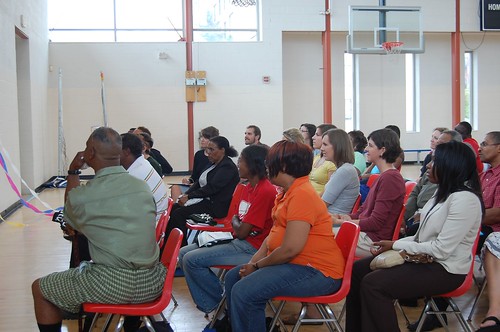
Bread for the City clients and staff came together this morning for a brief but emotional ceremony, in which we honored members of our community who have made great progress.

As Southeast Center director Lynda Brown (pictured below) told the crowd, "It wasn't easy along the way: you've had difficulties. But you haven't let it stop you. And it was a privilege for us to see all that you've achieved."
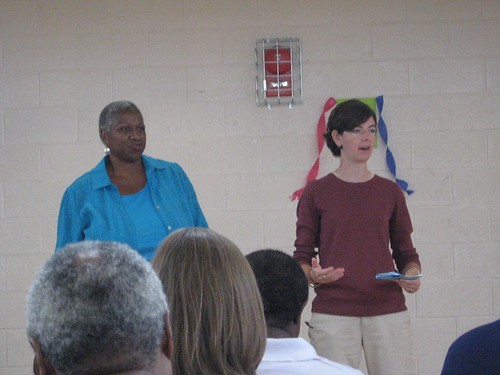

After passing out Certificates of Achievement to each client, Deputy Director Jeannine Sanford (not pictured) encouraged people to share a bit about themselves and the work they've done. "We feel it's so important to recognize all that our clients have accomplished. Your stories are heartbreaking and heartwarming, tragic sometimes, but also triumphant. In sharing these kinds of stories, and hearing about your triumphs, we find the strength to carry on."

Many clients were acknowledged today, and here we share some of their stories with you.


Sheila Bryant

Sheila Bryant was our keynote speaker:
I thank Bread for the City and Deanna [Drake] for giving me the strength to stand. When you think you're lost and you have nowhere to go, you can come here. They listen to you, and they don't judge you. They are kind. They give you back your strength.
Sheila then read us a poem, which she says she composed while studying for the GED. She graciously gave us permission to reprint it here, and you can also find it here.
Who Am I?
I am a creation of God from high above,
I am a creation of God given so much Love.
I am a creation of God born into the world of sin.
I am a creation of God taught never to quit within.
Who Am I?
I am a creation of God with strength to stand strong,
I am a creation of God though I may do wrong.
I am a creation of God kneeling down to pray,
I am a creation of God thanking God for another day.
Who Am I?
I am a creation of God learning the ways of life,
I am a creation of God trying to do right.
I am a creation of God giving all I can give,
I am a creation of God just wanting to live.
Who Am I?
A creation of God that's who I am!
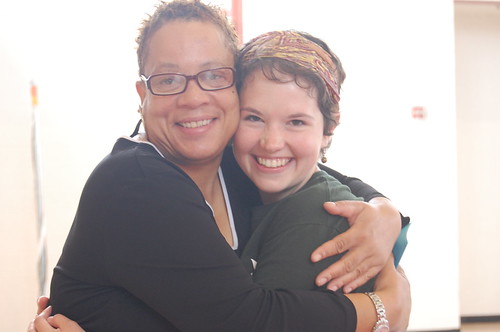
Sheila has worked with Deanna Drake for just over six months. (Read Deanna's column about volunteering at Bread for the City here.) In that time, Sheila has had her social security disability benefits approved, purchased prescription glasses, enrolled in Medicaid, and applied for affordable housing.

There's a lot of work left to do: Sheila is planning to go to school in accounting, and she wants to purchase a computer so that she can work at home, because her disability makes it difficult to stand very long. But she's on her way - having never received mental health counseling before, Sheila has now enrolled in counseling at the Women’s Center.
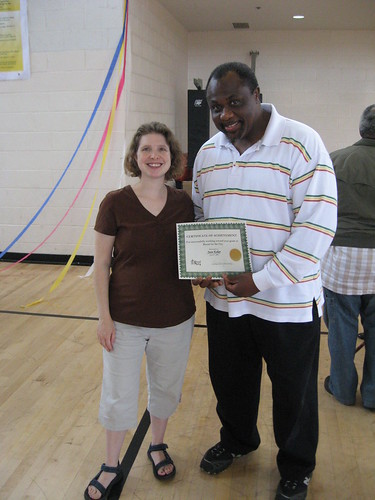

Jusu Koker (pictured here with Social Services senior Case manager Stacey Johnson)

When I came to Bread for the City," said Jusu Koker, "I'd just gone through a divorce. I had nothing. I was sick, and had needed ten surgeries. Stacey saw how I looked and how I felt and said 'we can help you.' And through her I met all these people who helped along the way."

Jusu, age 50, is well on his way to achieving his goals.

When he first started working with Bread for the City, he had some knowledge of computer technology--but he described these skills as "archaic." So he took months of higher education classes. When the certification exams came around, he experienced serious test anxiety. Jusu failed his first test, and he was devastated. However, with Stacey's encouragement, Jusu eventually went on to pass the exams necessary to become A+ Technician Certified.

At the age of 50, Jusu has enrolled in Strayer University, where he will study Computer Information Systems. In order for his dream of continued education to become a reality, He hopes to finish school and would like to teach before taking on the corporate world or a Master's degree. "I'd like to give back some of what I've been given," Jusu says.

"Without Bread for the City and Stacey, I don't know where I would have been."
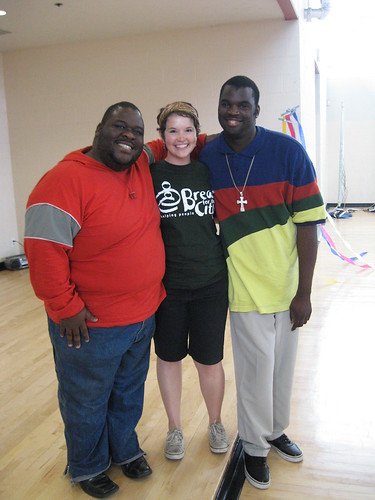

Yenusa Eke (pictured here on the right, with Deanna Drake and his minister, Deon)
I came to Bread for the City when my friend told me about them. I was sick, but I didn't think I could afford a doctor. I didn't think I could afford to get into school either. I was just shutting down. But Deanna showed me ways to look at life differently. She hooked me up with the medical clinic, and helped me find education programs. Now I don't think that giving up is an option.

Tomorrow I'm heading up to New York City to be ordained as a minister. I'll be the co-pastor of the Praise Life Ministry here in DC.
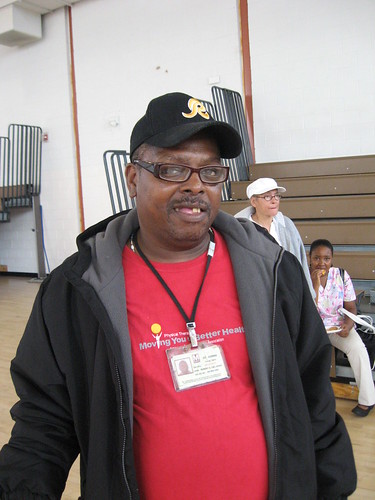


Robert Callahan

Mr. Callahan has been coming to Bread for the City for nearly 5 years now. Friends of his from the MLK homeless shelter originally recommended Bread for the City to him. The first time he came, he met Stacey Smith, who gave advice on where to find affordable housing. But Robert never followed up on it. Soon enough, though, Robert decided it was time to make a change. He went to meet with Stacey Smith again, and this time he was successful in obtaining a place to live.

Mr. Callahan is also a victim of a stroke. As he recovered, Bread for the City's lawyers helped him get disability benefits. He is very happy to not only have a place of his own to live, but monthly income to support himself as well.

“We need to have more Bread for the City’s,” he said excitedly, “then more people can get some good help like me.”

June 16, 2009

National Poverty News Roundup for 16 June

Tis the season, apparently, to wax poetic about the power of online social networking tools to promote social change. While it probably a good idea to curb our enthusiasm a bit, since the global coverage of social media is somewhat spotty at best, it remains the case that activists in well-connected regions can certainly take advantage of tools like Facebook and Twitter to get the word out. The U.S. government certainly thinks so; among the results of this increased emphasis on transparency and openness, both by government and civic watchdog groups, are two new Facebook apps that you can use to keep tabs on your elected representatives.


Last week we mentioned the increasing numbers of wired-but-homeless people in certain regions of the United States. This week, consider this story about a D.C. homeless advocate -- himself homeless -- who uses online networking tools to overcome the disadvantages of his lack of a permanent place to live, and also a new program in New York City that allows a small number of homeless to attend St. Johns University -- and provides them with "the books, the laptops, the notebooks, the pens, the whole thing." But in this techno-enthusiasm, let's not overlook the continuing relevance of old-school media like public radio, which remains a source of good first-person accounts and inspiring stories like this audio diary of a recently-graduated homeless high school student, and let's also remember the tried and true lessons of community organizing revolving around telling stories, regardless of the medium in which those stories are told.

Tis also the season, of course, for the end of the public school year, which increases demand on food banks as school-aged kids no longer benefit from free and reduced lunch programs. Michael Moore's public theatrical stunt, in which a collection is taken up for a fictional charity called "Save Our C.E.O.s" with the money actually going to local food banks, obviously doesn't raise much money, but maybe it and the film it promotes will raise some more awareness?

Upcoming Events: We Love DC and BFC Loves You

Here we are with some advance notice on a couple of upcoming social events to which we hope you can make it.

On July 1st, 7pm at Science Club (1136 19th St NW): We Love DC is throwing its First Anniversary Party, and they have decided to have it benefit Bread for the City. They're requesting donations for us at the door, and they reassure all would-be guests that your generosity will be matched by drink specials and an all-around swell time. Plus, Bread for the City staffers will be in attendance, special drinks in hand - so look for us! (Many thanks for Tom Bridge for setting up this event and including Bread for the City.)

And on July 16th, 6:30pm here at Bread for the City, we'll be having our Second Annual Parking Lot Picnic! Join Bread for the City staff, volunteers, donors, board members, clients, neighbors and friends. Seriously delicious food is in order, and we'll be waxing lyrical just a bit about the expansive future plans for our new Northwest Center. Check out the Facebook event page here, or RSVP by email. Call 202.386.7611 with any questions.

Finally, with some hardly-at-all advance notice: tonight I'll be speaking about Bread for the City's online communications strategy at the NetSquared DC event at Affinity Labs in Adams Morgan. It's all booked up by now (!) but if you're interested in attending, go ahead and shoot me an email and we'll figure something out.

June 15, 2009

We Need Your Help!

Free on Tuesday night? Looking to do something besides watching your most recent Netflix selection? Volunteer at the Spirit of Health event with Bread for the City!

The Black Women’s Health Imperative in partnership with Bread for the City, and the Women's Missionary Societies of the AME and AME Zion churches is hosting an exciting health and wellness event for Black Women in Southeast DC entitled "Spirit of Health: Black Women Inspired and Empowered." The event will take place Tuesday, June 23, 2009, 4:30 p.m. to 9 p.m. at Matthews Memorial Baptist Church located at 2616 Martin Luther King Jr. Ave, SE in Washington, DC.

To volunteer, email Melissa at marsenie@breadforthecity.org

The event will include screenings, a healthy family meal, a talk show style educational session on living and being well, pampering sessions, fitness demonstrations, health information, community resources, and fun activities for children.

In light of our recent blog post on the health of Black women in DC, events like this are important to educate and inform communities about healthful living. Your volunteering at the event will make the end goal of the Spirit of Health, or "increasing physical activity, making healthy food choices, and embracing emotional wellness," more of a reality for Black women in DC.

Blogging about Food Blogging

[Say hello to Nora Lewis, a new Bread for the City intern who will be working specifically on our food and nutrition programs. --ed]

~The Coalition Against Hunger blog, as well several others, is cheering last week's news that Costco will, as a test, begin accepting food stamps in three of its New York locations. The decision by the company comes after one of its rivals, BJ’s Wholesale Club, began accepting food stamps. The ED of CAH is quoted as saying that this decision is a “win-win for Costco and struggling New York Families,” noting that it will offer lower prices to struggling families and provide new customers to Costco. At first, Costco had not planned to include its new East Harlem location as part of this program, a neighborhood where many of the residents are dependent upon food stamps. However, after sufficient community outcry, Costco changed course and has decided to additionally include the E. Harlem store in their program.

~Also out of New York this week, the Food Bank of New York’s ‘Bank on It’ blog highlighted its CookShop for adults program, which appears to be similar to our own cooking classes. The program aims to combat diet-related health issues through cooking programs for seniors and adults who receive food stamps. Interestingly, the FBNY notes that its classes tend to draw mostly immigrant mothers who are unfamiliar with cooking with produce found in this country. As the program’s facilitator, Jaundy Paredes, says, “After you spend an hour handling, peeling, chopping, cooking and eating a particular vegetable it isn’t going to feel foreign anymore!” (Still, in many of the neighborhoods where these women live, fresh produce is hard to come by. There is some hopeful movement in that direction, however: see this NYT article about new legislation that will place more food carts in low income neighborhoods, as detailed in this NYT article--and stay tuned to this blog for news of similar progress in DC.)

~Lastly, and also technically out of New York, Mark Bittman’s fantastic food blog, ‘Bitten’ on the NYT website has a great guest post by Paula Crossfield, the editor of Civileats.com, (another great food blog) in which she shares her list of top sources for news about food and food policy. It's a great line-up, and we enthusiastically second her mentions of The Ethicurian, Grist's food blog, and Sustainable Food -- where we happen to have been guest posting.

And that's basically everything worth knowing about food on the internet in the last week.

June 12, 2009

Beyond Bread: The Latest in Healthcare

~A study that was released by the Kaiser Family Foundation on June 10th reveals some disconcerting news. Black women in the District are shown to be in considerably worse health than their white, Hispanic, and Asian peers in just about every way imaginable. According to the study, Black women in DC experience health issues such as obesity, heart disease, and diabetes, as well as AIDS and HIV in numbers that vastly outnumber the "valedictorians" of the nation’s health class, or DC’s wealthy and healthy white female residents. The sad truth is that many of these health issues are those that are relatively easy to avoid if the conscientious American is presented with the opportunity and resources to experience good health, such as access to healthful and affordable food, safe and pleasant areas to walk and exercise, and affordable quality health care.

~A step in the right direction is literally a few blocks away at Howard University Hospital, where a free student-run health clinic is set to open on June 18th. The project was a dream of a student named Raolat Abdulai. What’s especially cool about this new clinic is that Bread for the City was part of its creation! Abdulai visited Bread for the City’s medical clinic with other students to see a free clinic in action. As a result of her visit, she realized "how much effort has to go into a project like this."

~Speaking of health care, this mom named Kathie McClure from Atlanta is driving a purple school bus (with some intense smiley faces painted on the side) across America to learn about America’s "broken health-care system." She plans to end her pilgrimage in Washington, DC to share what she has learned in her quest for understanding. I don’t know how I feel about the purple bus, but I like her style.

~Our stalwart readers will know that the DC City Council recently passed the Bag Bill, which Bread for the City vociferously advocated for. This week, the UN’s environmental chief is calling for a global ban on plastic bags. I’m not saying there’s a direct connection, but the environmental chief for the UN may or may not subscribe to our blog via email. That’s all I’m saying. Take it as you will.

June 11, 2009

Growing Unemployment: A "Game Changer" for TANF?

[We're delighted to have another post about TANF by Joni Podschun from SOME. Word on the street is that SOME and Joni are on Twitter! - ed]

Facing a major budget crisis, Governor Arnold Schwarzenegger recently suggested his troubled state eliminate CalWORKS, California's version of Temporary Assistance for Needy Families (TANF). This proposal was labeled both "bad economics" and heartless. Indeed, it seems incredibly shortsighted to cut safety net programs (and forfeit federal money) even as people are falling out of work and struggling to survive.

Surely enough, the California legislature's special committee on the budget has just voted to reject the Governor's proposal. For now, the program lives on.

And yet, most policy makers, social workers, and advocates would agree that TANF is not meeting its objectives. As I explained here before, caseloads are stagnant at best, and in many cases falling, even as unemployment claims and Food Stamp participation skyrocket. Nationally, the share of families eligible for TANF that are receiving assistance has gone from 85% in the mid-90s to 40% now.

There are many factors behind this trend. For starters, let's consider one of the primary principles behind the Clinton-era Welfare Reform that created TANF: "Work First." Work First presupposes that TANF participants can quickly find employment in the job market and thereby reduce dependence on public assistance. TANF was originally devised under the assumption that it just would take a little help for most TANF recipients to find and keep a job (if only a low-wage entry level job).

That principle has been debated ever since, but in this economic climate it presents a glaring disconnect that is hard to avoid: these days, finding and keeping a job is hard for everyone, everywhere. 5.7 million jobs have been lost since the recession began in December 2007 and the rate of loss is only just now beginning to slow.


This graph from the Center for American Progress (CAP) shows the severity of the jobs lost compared to recent recessions. Meanwhile, the stimulus package passed a few months ago promises to preserve or create only about half of the jobs we have lost so far.

At a recent poverty conference I attended, Heather Boushey, an economist with CAP, called the economic crisis a “game changer” for TANF. The New York Times article on the conference quotes Dr. Timothy Smeeding, who says, "We're really in a pickle."

The cold hard truth that they're getting at is that the workforce doesn't really have room for TANF recipients -- and it won't for quite some time.

So, does this mean that the Governator is actually right to move to cut TANF? If TANF is meant to put people to work, but there's no work out there, should TANF get scrapped?

Not at all. At least in DC, the TANF program could be adapted to effectively help needy families even in this economic climate. So far, the program has not been responsive to the "changing game." But the potential is there.

The first step would be rebalancing TANF services to go beyond Work First.

Currently, TANF-funded employment services focus primarily on soft skills: how to dress, how to interview, how to conduct yourself in the workplace. In theory, that's enough to get people into basic labor. But it doesn't actually equip people with the hard skills and education needed to be a truly valuable member of the work force.

Programs that focus on hard skills already exist within the current TANF structure in DC. TANF recipients can receive tuition assistance towards a college degree, for instance; they can also engage in subsidized employment and on-the-job training. If they know who to ask, TANF recipients are usually able to get permission to go to GED classes or hard skills training like SOME's Center for Employment Training.

But the process for finding out about these programs is inadequate. In a study that SOME will release next month with the DC Fiscal Policy Institute called "Voices for Change: Perspectives on Strengthening Welfare-to-Work from DC TANF Recipients," we find that service providers and recipients don't know about their options for training, support services, and education. As a result, these alternatives to Work First are vastly underutilized (the final numbers will come out in our report).

More effort is needed to make the most of these programs. Part of the solution is simple enough: better procedures for assessment, screening, and orientation.

There should also be shift in funding priorities. These programs are a bigger investment, in terms of both public dollars and participants' time. But they are also a better investment. With the contracting job market unlikely to absorb TANF participants anyway, more long-term programs would actually be an optimal use of available resources, rather than leaving so many people to cycle back through the program. And when the economy rebounds, participants will be able to get better jobs that allow them to provide for their families.

In the meantime, however, there's another pressing need: greater income support. Even with more effective job training programs, TANF recipients are facing a long stretch of unemployment as our country winds through the Great Recession. During that time, we need to ensure that these needy families have adequate income, as we've discussed before. (Currently, the TANF benefit for a family of three is just $428 per month. That's intended to cover housing, transportation, utilities, household expenses, etc.)

We applaud DC Councilmembers, led by Jim Graham, who voted last week to increase the TANF benefit in the fiscal year 2010 budget. We should take the next step and look at what families really need to be healthy and stable.

June 10, 2009

So, what are those other guys up to?

Some of our non-profit partners have joined us in the blogosphere, so I thought it would be worthwhile to check in and see what they've been blogging about lately. (Maybe a new roundup in the works?)

~One of our closest legal partners launched a blog on June 1st! Making Justice Real is operated by the Legal Aid Society of the District of Columbia, an organization that provides civil legal aid to low-income residents that cannot afford a lawyer. Their all-star Executive Director, Jonathan Smith, appears to be manning the helm at this point--which is exciting, because that guy knows a lot. We hope to see more of the Legal Aid lawyers participating in the future. You can also follow them on Twitter.

~Part of the legislation that gave DC a new baseball stadium in Southeast also started a community benefit fund. The DC Fiscal Policy Institute is recommending that the money in the Nationals Stadium Community Benefit Fund be used to beef up affordable housing programs like the Housing Production Trust Fund and the Housing Purchase Assistance Program. Mayor Fenty is instead proposing that the money be used to close the deficit for the bloated Summer Youth Employment Program.

~I didn’t know this, but Martha’s Table benefits from Clagett Farm in the same way we do! Clagett, the result of a partnership between the Capital Area Food Bank and the Chesapeake Bay Foundation, allows food pantries to buy shares at a reduced rate so we can all distribute fresh, locally grown produce. In fact, the partnership we have with Claggett was the first step in our over-arching Nutrition Initiative through which we secure all sorts of fresh produce (btw--Martha's Table is also on Twitter).

~If you’re interested in serving your community and you're considering AmeriCorps, DC Learns can help you get a leg up on the pile. They are currently accepting applications for a Literacy*AmeriCorps Member in the 2009-2010 service year.

~The Campus Kitchen Project Blog has a good response to the Washington Post story stating that poor people often must spend more than their affluent neighbors to survive. For more information, you can also see our response to the same article.

June 9, 2009

These are the People in the Neighborhood

DC is fortunate to have a large blogging community. (Shaw, where Bread for the City NW is located, has even been named one of the top "bloggiest neighborhoods in the country.") This blog scene is pretty neighborhood-centric, with an active interest in things like real estate, local commerce, crime, traffic lights, city history, and food. (Lots about food.) Unsurprisingly, given the main industry around here, DC’s blogosphere is often very sophisticated about the effects of policy and urban planning on everyday life.

Many of the neighborhood bloggers are young professionals who first moved to their area not too long before launching their blogs. Blogs like 14th & You, Renew Shaw, and And Now, Anacostia are monitoring the rapid change in their neighborhoods, cheerleading the good and watchdogging the bad. They are characteristically supportive of development, but they also hold a genuine appreciation for the historic character of a neighborhood.

In the past few weeks, we invited a bunch of these local bloggers to come take a tour of our facilities and discuss community issues. Their insight is of great value to us as we continue to deliberate upon the role that Beyond Bread can play within the emergent local blogosphere.

After all, Bread for the City helps and advocates for people who, by and large, don’t have regular access to the internet, let alone exposure to blogs. In many cases, our clients’ livelihoods are potentially threatened with further marginalization by the very forces of development that local boosters are inclined to support.

And yet, throughout the meetings, we found ample common ground. The bloggers all shared a deep and thoughtful support of diversity – not just as a platitude, but specifically in the form of mixed-income development that preserves affordable housing. Likewise in expanding local access to fresh and affordable food. In important ways, we are natural partners in the effort to improve the quality of life in the community as a whole.

One thing that came up repeatedly in discussion was the value of more eyes on the machinery of the city – at budget hearings, council meetings, public agencies, etc. Here at Bread for the City, we get a close inside look at changes that affect thousands of people in our community, but that might fall out of sight of even the most obsessive internet busybody. As we all spoke with these citizen journalists about the power dynamics in the city, the conversational vibe went beyond neighborly and into a new exciting phase of the collaborative.

After all, someone’s gotta do it. Without falling too deep into the “Death of Newspapers” discussion, suffice it to say that we’re witnessing a swift collapse of conventional local news reporting. And to be sure, a neighborhood blogger doesn’t have access to the breadth of resources and institutional heft that a newspaper provides. But a committed citizen can sometimes have more ability to push closer to the truth, and more commitment to keep on a story as it develops.

The resulting information may only ever reach a small handful of people who care about it, as opposed to the masses skimming the paper over coffee and during commutes. But passionate, organized small groups are usually what make large-scale change happen.

In picking up where traditional media fell off, will the hyperlocal blogosphere be able to restore and even improve the civic balance? It’s not yet clear. But the exciting thing is: it’s up to us.

National Poverty News Roundup for 9 June

Since my last roundup post two weeks ago, various corners of the Internet have been buzzing about a Wall Street Journal article concerning the use of various online technologies -- Facebook, Twitter, and hoary (!) things like e-mail and plain old websites -- by homeless people. While this kind of use of technology is in many ways old news, since Google started giving free voicemail boxes to homeless San Franciscans last year, it does drive home an important point about the ubiquity of computer-mediated connectivity in modern society: we are now at a point where a blogger can ask, half-seriously, whether it would be worse to lose your home or your internet access, and Cory Doctorow can opine that "network access" will be a human right in ten years. On one hand, some argue that network access can be a tool for getting oneself off the streets, and for staying plugged into the broader sweep of humanity; on the other, the differential success of a virtual networking site like I-Neighbors -- apparently, the tools work well in communities that are already organized, and complement rather than replace traditional face-to-face bonds of local community -- suggests some need to curb our enthusiasm about the transformative effects of online communication.


Online tools certainly provide some other intriguing capacities, directed less at the poor and homeless themselves and more at those who work to improve their situations. For example, consider this national map of homelessness assembled by Home Free Organization. Or consider this story about a homeless woman; perhaps the most intriguing thing here is the lead: "I found Joanne via Twitter." The federal government weighs in with data.gov, a massive online portal to numerous public data-sets assembled by federal agencies. Perhaps these sources of data will help the increasingly-common "poverty summits" cropping up around the country as they try to craft effective policy solutions; perhaps the data will allow a better appreciation of the success of programs like the "Housing First" strategy presently being tested in a number of cities.

Obviously data alone won't solve the problems of homelessness and poverty, and neither will marches and rallies -- although marches and rallies, like other activist campaigns, can certainly raise awareness and put pressure on elected officials. But tough policy choices remain. Since quality food is more expensive, do we prioritize feeding as many people as possible, or feeding fewer people well? Does one improve average quality of health care available to Americans, or address the glaring disparities in care and disease prevalence between different socioeconomic groups? What happens when a church's effort to help the poor and homeless starts to displace members of the congregation, thus threatening the survival of the effort itself? And what do we do with the built environments in which we now live, environments that may themselves contribute to poor health by discouraging sufficient physical activity? Tough choices indeed.

June 8, 2009

Earth, Wind & Fire, & Chicago, & Bread for the City

This Wednesday is Summer 2009's can't-miss double-trouble all-star super-duper rock-and-roll mega-event comes to Merriweather Post Pavilion: Earth, Wind and Fire and Chicago, together again!

Furthermore, we are thrilled to announce that - as part of the World Hunger Year rock star alliance - the two classic bands are boogeying down in support of Bread for the City!

We'll be the designated recipients of all DC donations raised as part of their limited edition "three songs for three dollars or three cans of food" offer. Donate three bucks or three canned goods, download three newly-recorded EW+F-+/or-C songs from the internet. What a deal.

Many thanks to World Hunger Year for setting up this great opportunity, even though an onstage shoutout from Bruce Springsteen would have been kinda cool. Next year, maybe?

In the meantime, Bread for the City staff will be tabling at the show. If you're going to the jam, stop by to drop off a donation, or just to say "hello!" (Is it us you're looking for?)*


*Um, wait - is that a Lionel Ritchie reference? It's hard for your Beyond Bread editor to keep these things straight.

June 5, 2009

Beyond Bread: an Advocacy Win Edition

~This week Bread for the City was delighted to see two things we advocated for come to pass: the expansion of food stamps, and the approval of the “Bag Bill.” As our guy Greg pointed out earlier this week, the food stamp expansion was both overdue and relatively easy to support since the funding for it came from federal stimulus cash. Having said that, the expansion shouldn’t be written off as small. It increases the income threshold to 200% of the federal poverty line (up from 130%), and eliminates the damaging “asset cap” that existed before, and auto-enrolls people in the utility assistance program. The Bag Bill, a piece of legislation that would put a nickel fee on grocery store bags in an effort to clean the Anacostia Watershed, will help the neighborhoods that bank the contaminated river and is good for the environment. Many thanks to the DC City Council for approving these needed measures.

~ We Love DC picked up the story that Councilmember Mary Cheh has introduced legislation that would add the homeless to groups protected under hate crimes legislation. We reported a similar measure being introduced two months ago in Maryland. Can we have a race to see whose will pass first?

~Bread for the City’s new Human Rights Clinic, now open on Wednesday evenings to those seeking asylum, was picked up by the Immigrant Rights blog on change.org, and Nomadsland. The word is getting out!

~There were a couple of notable commentaries this week about the nature of poverty. The always insightful Poverty in America blog had a great write up about the need to change our perception of poverty nationally. The Washington Times had a small but interesting blurb that could really serve as a fact sheet about the homeless population in DC, and Stone Soup Station had a great article about how internet access (when available) can make a huge difference to the homeless population.

June 4, 2009


I’m honored to be featured on the cover of this month’s Washington Lawyer in an article about pro bono partnerships among the legal and nonprofit communities.

Highlighted in the article is Bread for the City’s work with the DC Bar Pro Bono Program’s CED Project, which matches nonprofits like us with law firms who have the expertise to help out with our business law needs. In 2007, CED matched Bread for the City with DLA Piper, who then helped us through the unimaginably complex world of new market tax credits; credits that will provide Bread for the City with funds to expand our Northwest Center this summer. Two years later, we’re honored to still be receiving help from DLA’s David Krohn and Stephen Sharkey.
DLA Piper is one of several law firms that generously give of their time, talent and resources to help Bread for the City. In fact, our pro bono partners outnumber our paid staff.

WilmerHale provides Bread for the City with pro bono counsel for our organizational policy needs. Dickstein Shapiro worked out a deal with the IRS when a payroll company stole from us and several other nonprofits. Covington & Burling has loaned our legal clinic a part-time associate for many years. These firms may be corporate giants, but they are also true community partners with a real positive presence in the District.

Tonight we honor these partners—and the many other lawyers, doctors, designers and accountants who give to us so freely—at the office of one of our closest pro bono partners, Alston + Bird. A big thanks to each and every one of them for their decades of generosity.

June 3, 2009

Food stamp expansion bill passes!

Yesterday, along with the rest of the budget, the DC City Council passed legislation that will significantly expand the eligibility for and amount of food stamp assistance in the District. The Food Stamp Expansion Act of 2009 will help thousands of poor DC families while also bringing millions of federal dollars into the city.

This bill was basically a no-brainer, and it passed with unanimous support. But the real leadership on the issue came from Councilmember Michael Brown. Our sincere thanks go out to Councilmember Brown (as well as Councilmember Tommy Wells, who also led on this issue).

As we’ve reported here before, the food stamp expansion will eliminate the program’s “asset cap” of $2,000, which previously meant that families would have to spend down their savings before qualifying for assistance. Through a measure called “Heat and Eat,” the act also automatically enrolls all food stamp participants in a utility assistance program that, in turn, increases the amount of food stamps that they can receive. And most notably, the Act raises the qualifying level of income to 200% of the Federal Poverty Line--up from the previous level of 130%.

Independently, these policy changes might seem incremental. But they will compound with the recent (and major) increase in food stamp assistance levels from the federal stimulus bill. As a result, $15 to $21 million in new federal funding will be brought to our low-income residents. (And the entire city benefits from that influx of food assistance, as these stamps will generate approximately $25 to $35 million in local economic activity.)

When news of this policy change spread among Bread for the City staff, I heard a common reaction: there are lots of opportunities in DC for policy to extend more forms of assistance to more people, but it takes time, focus, and engagement with our elected officials to make even simple no-brainer changes happen.

So on that note: our "Next Most Promising Low Hanging Fruit" contest is still open! Point out the next big (or even small) win, lay out the road map to change, and you will receive a copy of the 2009 Food Stamp Expansion Bill signed by YOUR FAVORITE X-MAN. Contact me with your submission. (Check here and here for inspiration.) Si se puede!

June 2, 2009

Bag Bill passes!

We're pleased to see that the City Council has unanimously voted to institute a fee on paper and plastic bags in grocery stores. (A recent report by the DC Department of Environment suggests that this measure could eliminate up to 47% of the trash in the Anacostia river tributaries, and 21% from the river’s main stem; PDF here.)

We've supported this bill here, as Councilmember Tommy Wells pledged to us that the revenue generated by this measure will be used, in part, to provide an ongoing supply of reusable bags that service agencies like Bread for the City can distribute to our clients.

Many thanks to Councilmember Wells, and the Trash Free Anacostia coalition, for pushing this smart policy through. We look forward to working with the City to get these reusable bags out into circulation as quickly and widely as possible!