
 Big news from our pantry: starting today, and running through the rest of the harvest season, clients of Bread for the City’s food pantry will enjoy a new level of choice: all fresh produce, for any who want it!
This is a true milestone in our Nutrition Initiative, which is now heading into its fourth year of great progress in advancing the health of our community. In 2008, we overhauled our menu to feature all healthful items; in 2009, we committed to provide at least one item of fresh produce in every bag; last year, we adapted a “choice” system that enabled clients to decide what items they wanted (strategically promoting fruits and vegetables in the process). As a result, our clients are reporting increased satisfaction and increased preferences for healthier, greener offerings.
Now, thanks to the tremendous success of our Glean for the City program, we’re pleased to offer clients the option to skip canned goods entirely. If clients want to receive all fresh produce, we’re now happy to provide it! It’s a great step for the health of our community. Says our nutrition maven Sharon Gruber: “Health-wise, our menu of canned goods is already pretty good -- with minimal additives, low sugar and sodium, and so on. But fresh veggies just taste better, which encourages people to have more of them. And if eaten raw, they have enzymes and other healthy things that are missing from many canned foods.”
“Plus,” Sharon adds, “the diversity of our fresh produce will far outshine the canned goods we offer. People can try new things, get things that are otherwise cost-prohibitive, and get more of an array of vitamins and minerals.”
As our client and garden volunteer Erika Moses explained to WAMU’s Sabri Ben-Achour last week in our rooftop garden, this kind of exposure even in small amounts can have substantial impacts on people’s diets. (Listen to that story in Real Audio here, Windows media here.)
As great as all this is, we can’t help but also note that this all-fresh step will actually save us money! The gleaned produce is obtained for free from regional farms and local markets. The only costs are staff time, transportation, and some equipment like bins and gloves; that works out to about 20 cents per pound, by far the cheapest of all our food items. This will greatly help our pantry’s budget for the winter months. (Which is especially important, since food prices are on the rise again.) That said, we do expect a need to increase our capacity for storing all this produce. During the harvest months, our pantry staff pack their fridges literally to the max. In fact, last year, we lost some produce to rotting and had to cut the harvest season short due to lack of storage.
To fulfill this pledge to our clients throughout the year, we very well may need to expand our fridge capacity! That may cost us as much as $15,000! Can you help us maximize our freshness? Donate today to help us upgrade our fridge capacity.
This great step forward is made possible by two essential sources of support. The first is farms and farmers markets -- so a huge thank you to the West End Farmers Market of Alexandria and the Bloomingdale Farmers Market here in Northwest. And the second is people like you -- so please support our efforts today.
June 1, 2011
Want it fresh? You got it.


May 31, 2011
Our Garden: Grandly Opened!
On May 20th, we officially opened the new Rooftop Garden at our Northwest Center. The weather was perfect, the garden was blooming, and we had a great turnout -- our heartfelt thanks to everyone who made it possible!
Check out this great slideshow of photos from the event below (or browse the full set on Flickr).
Among our guests was WAMU’s Sabri Ben-Achour, who produced this report that aired last Friday on Metro Connection -- check it out online. (Real Audio here, Windows media here)
As Mr. Ben-Achour notes in his report, our rooftop garden project is all about bringing people closer to our food -- and to each other. On those fronts, it’s already a great success! The space is not just beautiful; it also fosters opportunity for us to work together and learn from each other about how to work for healthier lifestyles and stronger communities.
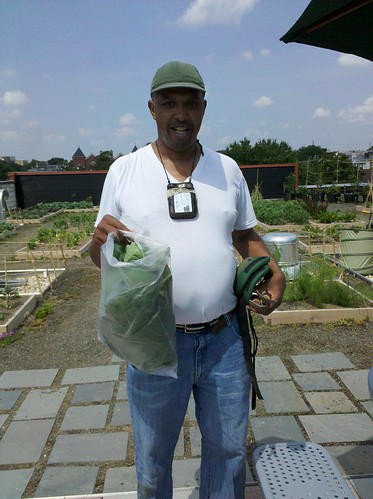
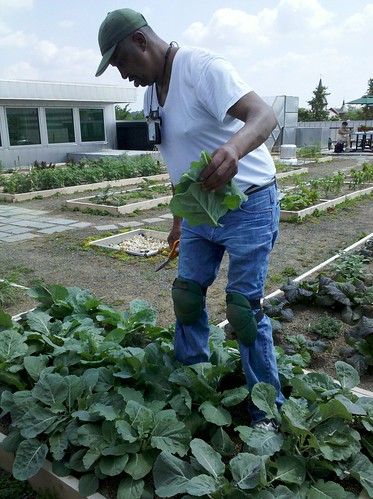 Indeed, just days after our big buzzy Grand Opening, we quietly conducted the very first harvest from our garden. Longtime Bread for the City client George joined us during "open garden" hours (Mondays and Wednesdays, 9am-noon, by the way), and he clipped bags of leaves from our collard greens which are already overflowing their bed. George took some for home, and brought the rest down to the pantry to share with folks there.
"I can't have a garden at home," George tells us, "and I’ve wanted a chance to do this work for so long.” We’ve known George for a while, and we can say that we’ve never seen him so happy and excited.
So we want to say a huge Thank You to all those who attended the ribbon-cutting event and have donated in support of the program so far. This has all been made possible by your support.
Of course, this is just the beginning. We’re also building our Southeast Center garden, and we've just begun to develop programming for each site. We need your help to keep this going. And the best way to help is to give:
For $25, we can purchase and maintain five plants for an entire season.
For $50, we can organize a complete gardening-and-nutrition workshop.
Gifts of $100 or more will be honored with a name or phrase of your choosing to be painted by members of our community onto ceramic pots.
Gifts of $1,000 will be honored with the dedication of an entire bed!
Help us make this community strong and green. Give to the green roof gardens today.
March 3, 2011
Things I learned in three years of our Nutrition Initiative: My Top Ten
Somehow three years have gone by (actually flown by) since I started working at Bread for the City. As the go-to person for all things nutrition-related, I’ve been asked to reflect on how far we’ve come in that time and where we’re going next. I figured a Top 10 list might be a fun way to go about it (it could have been a Top 100 list, but...) so here we go, in no particular order:
10. My work day will never be boring. Our clients face many different kinds of problems, and we must always think creatively to support them in addressing them. This means we rely on our co-workers who have expertise in a variety of areas, and it also means that we need to be creative.
9. Building it does not necessarily ensure that they will come--even if they sign up to come. We’ve developed a lot of fun and free opportunities to learn cool things here in nutrition classes, cooking classes, and more. But our clients’ schedules are at the mercy of all kinds of challenging factors: they might not have working phones to receive calls; they might be dependent on unreliable public transportation; they’re often thrust into crises of all kinds; and sometimes are dealing with physical and mental health issues that make it challenging to keep commitments. How does this affect the programming we offer? Well, we try hard and then hope for the best. We make reminder calls, put signs up around the building, and then we cold-call all past participants of related workshops in hope that it might be a good fit for them this time around, as well. And then we divide by 2. If 40 people say they’re coming, we have learned to expect that this means we’ll have 20 people max, which might be the number we were hoping for anyhow.
8. Simply sharing stories can be transformative. This year, we explored struggles relating to food and health in a support-group setting. People share things in a group that they might not in a one-on-one consultation, and peers can learn a lot from listening to each other. We plan to start up the second iteration of our weight loss support group in the spring.
7. It is worth getting your hands dirty. At a client trip to a nearby urban farm this past summer, a regular cooking workshop participant turned to me with a fistful of mint and asked, “Is this mint?” Me: “Yes.” Client, smelling the mint: “I never tasted mint before the fish stew we made at the cooking workshop last month. I loved that stew and have been intending to make it. And now I get to pick the mint myself. I’m going to make it tonight! Just beautiful.” Sometimes it takes getting one’s hands enmeshed with the food to demystify it and motivate to try it at home. We hope to do lots more of this at our own rooftop gardens this summer.
6. Having the education doesn’t mean we have the answers. After getting a complete picture of a medical patient’s diet and exercise habits, I ask: “What do you think about how you’re eating?” and “What have been obstacles in the past that have stopped you from getting where you want to be health-wise?” and also, “What do you need to help you take better care of yourself?”
5. It’s hard to know what will stick and how things travel. For example, a few months ago I was talking with workshop participants about the disproportionate amount of starchy foods at a traditional Thanksgiving meal. When I asked the group if squash counts as a starch, one diabetic client, Ms. Johnson, said, “Is it winter squash or summer squash? You taught us a while ago that winter squash like butternut is full of starch and this matters for diabetes, but summer squash like zucchini is more watery and cleansing.” I knew that she was engaged during the workshops, but this was impressive recollection. Also, sometimes it seems that a client might not be ready to make changes just yet; but seeds can sprout later on, or get transferred to friends and family. You just never know.
4. Food can mask almost anything if someone wants it to. Lots of patients say they overeat because they “love” food, but they also describe eating as a numbing technique, a way to disengage from something deeper going on. When we love something, don’t we want to fully engage in it? When people overeat in this way, it’s often that first bite that they love, but then they love the mask that the eating creates. I’ve had the honor of witnessing some patients do the complex work of addressing what’s happening in that deeper place, and have seen them freed to truly love food, to eat it slowly and savor each bite.
3. Food is more complicated than we might imagine. In fact, there are more reasons than I ever could have imagined as to why people make the decisions they make around food. It never occurred to me that one of my patients would tell me that she can’t cook at home because she is too wide to turn around in her narrow galley kitchen. Or the pervasiveness of the story of those of us who are out of work, no longer on a schedule, and too depressed about it to try to come up with a plan. This is precisely why I don’t prescribe to one specific diet. Every body is different. Not only are we unique on a biochemical level, but our life circumstances also dictate unique approaches that can work for us.
2. Effective leaders initiate progress but are still grounded in their community. Being a leader means BFC needs to stick to its values and lead by example while also staying in close contact with the clients we serve. We have a serious responsibility to our clients and to the community overall, which means, among other things, being firm about not distributing high-sugar and high-sodium items that promote diabetes and heart disease. And it means having a continuous dialog with our clients about the food we provide.
1. There is much more to be done. When I started here three years ago, it was on a three-month contract. Still, I thought a lot could be accomplished in that time. Though I might have accomplished some of it, it was certainly a drop in the bucket. I think of that first year as the year of the low-hanging fruit. I started work in both the medical clinic and the food pantry; among other things, I started seeing patients individually, and the food program stopped purchasing unhealthy snacks, high-sodium soups and other canned goods, and we implemented a no trans-fats policy. With Glean for the City in full swing, as well as other projects in the works, I see years two and three as a time of programmatic innovation. I hope that at the end of this year, my fourth, I can look back on the meshing of some of our new activities into our overall holistic approach. I hope that our messages about food and health in the medical clinic and in the food program will be even more unified and that our complement of programs will offer all BFC clients an opportunity to access and explore healthy, tasty foods in a way that is fun, inspiring, and nourishing.
Thank you for supporting us along this great journey.
February 3, 2011
A hearty Mazel Tov to Dr. Randi!
Jewish Woman magazine and Jewish Women International are highlighting Dr. Randi's amazing work here at Bread for the City and across the District. In an extra punny move, JWI has dubbed Dr. Randi a Jewish HERoe for her 20 years of leadership at Bread.
They’ve brought attention to her leadership with our nutrition initiative:
Lately she’s been counseling patients on proper nutrition, often to help manage long-term diseases like diabetes. Bread for the City food drives would often yield less-than-healthy options – items like donated candy and cookies that would wind up in food bags. The staff eventually decided to model better eating habits by handing out more sensible choices. Bread for the City now has a nutrition consultant on staff, and gives out fresh fruits and vegetables from local farms.
We're kvelling*! Check out the full post and videos on JWI's blog.
*Yiddish for proud.
December 10, 2010
Greens, Grains and the Grocery Store with Client Advisory Board Member Dorothy
Dorothy Kemp, DC resident and member of the Bread for the City Client Advisory Board, recently took Allison, a Bread for the City intern, grocery shopping. Let’s join them as Dorothy shares her experiences with being happy and healthy with an affordable, plant-based diet.
Dorothy chose the P Street Whole Foods for our grocery shopping tour, because of the bulk food options. But as we enter the store, Dorothy makes a beeline for the vegetables. Tonight she will be cooking a quinoa and winter vegetables dish, but is quickly distracted by the leafy greens -- rapini and dandelion greens are her choices today. “Don't worry, these aren't from your yard.” These are added to her usual purchase of mixed salad greens, sold for under $5 a pound.
Dorothy, who has for years been eating a primarily vegan diet on a limited budget, laughs about the grief she gets from friends and family for her love of salad. “People are always asking: 'Why are you eating that?' Cause it works!”
“For me, not having meat is no big deal – I'm still healthy and hopefully the planet is a little cleaner. We have so much abundance and so many selections to make, and hopefully we can help each other make some of the healthier choices. And it's not just affordable, but you can save money! Beans over meat, whole grains in bulk, vegetables…. The meat -- I don't miss it!”
Dorothy's number one tip is to get to know the bulk foods section of stores like Whole Foods, with a wide variety of healthy whole grains, dried fruits, and nuts available more cheaply than in boxes or in pre-packaged meals. Whereas in the other aisles, a box of rice can cost $3.00 a pound, in the bulk aisles, it's only $1.69 a pound. In this video, learn two of Dorothy's tricks - knowing how much pasta is enough and knowing where to look for grains:
“Once a week or so I would try something different, try a new grain I didn't know, see if I like it,” Dorothy explains how she came to love quinoa – a seed that cooks like a grain but contains all essential amino acids and is a staple in her cooking throughout the year. (It sells for $3.39 per pound in bulk versus the equivalent of $6.00 per pound in other aisles). We agree all the options might be intimidating for someone who's never seen this section. “I would start with something that they're familiar with – raw nuts, plain rice. And then if there's something that they'd maybe heard of, or something they see on the list of grains, look it up and try to figure out how to use it.”
An incremental approach to eating healthier is something that Dorothy has applied in her own life and does not hesitate to share with friends. “I always encourage people to share what they've cooked. If you make enough to share, they'll usually say, ‘This is not bad!’” She's found that some of the main obstacles to healthier eating are attitudes about meat and sugar. With no shortage of creative alternatives, Dorothy finds that she can convince friends and family that other options exist. For folks who don't like beans, she recommends starting with hummus. Not interested in cutting out sugar? Try using less sugar and adding fruit and cinnamon to oatmeal.
“I like being 64 and being able to tell people I can still run for the bus, I can still bend over to tie my shoes, I'm looking forward to being able to live a few more years,” she explains. “Eat what you know is good for your body and makes you happy, and doesn't clog your arteries. And don't apologize for it!”
At the same time, the challenges of making healthy choices are not lost on Dorothy. For her, the idea of food justice means “everyone should be able to have the best quality food that you can have, should be able to have a decent meal on the table. In a country of such abundance to still have people who don't have access to good food – it's like how people don't have access to good healthcare. It is a right to eat well, to be able to nurture your body.”
Sharing good eating habits with neighbors sounds like a good place to start. Here are some other tips from Dorothy:
- Avoid the packaged foods. Why? “Too costly, too much salt, and you can make your own!” Steer toward the bulk foods aisle instead.
- Take one step at a time: We're brought up on a lot of meat and sugar and something like brown rice has a texture that someone might not appreciate the first time around. Mixing whole grains in with regular cereals for breakfast or combining brown rice and white plain rice, can be a way to transition towards healthier meals.
- Explore meat alternatives: Learning about how to sneak beans into meals for friends and neighbors was a highlight of our trip through the aisles - anything from cooking chili with vegan “meatloaf” to offering hummus as a snack.
- Bleach bath for your produce: Protecting yourself from the herbicides and pesticides on fruits and vegetables doesn't have to involve spending loads on organics. Mix a teaspoon or so of bleach in with a bowl of water and rinse your produce in it. This removes all the chemicals without leaving any taste of bleach.
- Olive oil and low sodium chicken broth: Cooking with a little of either of these makes for a cheap and easy way to add tons of flavor to your veggies.
- Get to know portion sizes: Knowing how much food is appropriate for your body can save you money as well.
November 23, 2010
Yum! Bread for the City's Cooking Class, Thanksgiving Style!


Thanksgiving: when families come together, gather around the table, and eat a whole lot. It’s a time for thinking about our family and our blessings – and right alongside those things, we should also be thinking about our health.
Last week, our nutrition consultant, Sharon Gruber, hosted a special Thanksgiving cooking class for clients and staff. Sharon asked the group to list their favorite Thanksgiving foods. The list was long, including: turkey wings, sweet potatoes, macaroni and cheese, ham, pie, collard greens, mashed potatoes, corn pudding, cranberry sauce and Buffalo wings. At one point, a long-time cooking class participant, Val Ford, suggested “salad.” The room erupted with some astonishment, but Val held her ground and insisted that salad does have a rightful place at the Thanksgiving table.
Sharon then asked the class to identify those food items that are starches. There was some confusion as to what constitutes a starch, and Sharon explained that starch is a food that breaks down into sugar into our bodies. This includes foods like rice, pasta, and potatoes. Sharon explained that though not all starches are bad, but too much can be detrimental to your health. Starchy foods on our Thanksgiving list included be stuffing, Macaroni and cheese, mashed potatoes, etc.
Sharon advised that, like dinner on any other night, we can find balance on Thanksgiving by adding vegetables into starchy items. Dishes like stuffing can accommodate a lot of vegetables -- like celery, onions, bell peppers and even apples. Like stuffing, potato salad can be made healthier by adding ingredients like parsley, onion, celery, and olive oil and vinegar (instead of using mayonnaise).
Even with desserts, Sharon talked with the group about how sweets like pie can be prepared in a healthier way. Instead of more bread and more starch on the top of the pie, putting nuts or oats can be less starchy.
The class then put what they learned into practice, cooking mashed potatoes and green beans and baking an apple crisp. The mashed potatoes were made with cauliflower mashed together because the vegetable would make it less starchy and it gives it a creamier base. While making the mashed potato with cauliflower, people wondered whether the dish needed butter--but that would add cholesterol to the meal, and the cauliflower replaces the need for butter to give it a creamier base.
Dorothy Corry voiced her opinion, “My main problem is that I try to not use butter for flavor so I’ll just add salt. Is there a replacement for using salt?” Sharon suggested that instead of using salt use garlic and onions. “Think green herbs, the more spice and herbs mean less salt.”
The apple crisp, which was made with oats, apples and cranberries, can be put into the oven just like a pie. At the end we enjoyed these traditional desserts, healthfully prepared, and still delicious. The biggest hit was the greens beans: several clients said that they’d never had vegetables that tasted that good.
October 27, 2010
Holiday Helpings: Help us be healthy
Most of the food in Bread for the City's pantry is purchased directly by us from the Capital Area Food Bank – putting your donated dollars to great bulk-scale use. (And it's not too early to give to our Holiday Helpings campaign, which starts next week!)
We truly value the generosity of our donors. Yet because we also highly value the health of our clients, we hope to channel the energy and commitment of our donors to ensure that clients receive foods that best support their health.
Research shows that there is a much higher incidence of diabetes and heart disease among populations that include our clients . These diseases are largely preventable through lifestyle changes like diet and exercise. By contributing foods that do not contribute to these diseases, donors can help Bread for the City be a part of the solution to this community health crisis.
With this in mind, we respectfully share our updated nutrition guidelines for donations.
Please keep in mind that we cannot accept the following:
• canned or boxed soups that are not labeled low-fat, low-sodium
• ramen noodles
• pastry items, candy, other sweet snacks (cookies, Jell-o)
• drinks that are highly sweetened or artificially sweetened (sweetened fruit juice, soda, sports drinks, sweet tea)
• cake and brownie mixes
• boxed macaroni and cheese
Instead we encourage:
• canned vegetables and beans that are labeled low-sodium or no salt added
• olive oil
• dry beans
• fruit canned in natural juices
• canned salmon, tuna, sardines, or chicken, especially unsalted and packed in water
• 100% pure juice
• whole grain flour and cereal that is whole grain, not highly sweetened (plain oatmeal, original Cheerios)
And we discourage but will accept:
• canned vegetables and beans that are not labeled low-sodium or unsalted
• fruit canned in light or heavy syrup
• sweetened cereal (Raisin Bran, Honey Nut Cheerios)
Thank you for joining us in this broad effort to improve the health of our community! To sign up to run a Holiday Helpings drive in your workplace or community, please contact Nathan LaBorie at nlaborie@breadforthecity.org or 202.386.7611.
October 22, 2010
Our Very Own Farmers Market!
Despite taking place in our conference room (because of rain outside) the market had an authentic feel, complete with cooking demonstrations, taster samples, and volunteer ‘vendors’ staffing the produce stands. For clients, it was an opportunity to learn more about the fruits and veggies that (thanks to Glean for the City) now fill our food pantry shelves.
Staff Nutrition Consultant Sharon Gruber prepared healthy, delicious samples; including a fresh beet salad and tasty apple dish. Staff and volunteers discussed options with folks as they browsed the wide selection of fresh produce. And while spirits were high, we made sure to recruit attendees to attend our monthly cooking and nutrition workshops.
With bags of fresh, free produce and delicious samples in hand, people were eager to talk about food. We discussed the high cost and inequitable access to fresh produce, the overwhelming health benefits of fresh versus canned, and the initial barriers to cooking fresh produce. One client stated: “Whole Foods and Teeters have the best options, but they are too darn expensive.” One client exclaimed to another: “It’s good for your heart! It’s good for your blood.” Another, after talking food shop with Sharon, noted: “recipes and education is key - some folks just don’t know how to cook the fresh veggies. But if you show them how, they will try it.”
Long time client Carol Motley summed it up best when she exclaimed, “This market is a nutrition mecca!” Ms. Motley told us that she's lost 40 lbs since switching to a vegetable-rich diet, and that she's sharing this with her children too. "But it is extremely hard to afford. If you did the markets every month it would be HUGE for me and my family.”
We're happy to oblige. Next summer, we plan to host several Bread for the City Farmers Markets!
September 8, 2010
Family Food Fun
The most lasting habits are those learned young, something BFC Nutrition Consultant (and mother of two) Sharon Gruber knows well.
Sharon, who conducts nutrition classes and cooking workshops with Bread for the City's adults clients, featured a Family Fun Party at each of our centers (Northwest in Shaw and Southeast in Anacostia). "I thought it would be great to provide a fun, health-focused outing for families the week before DC public schools start for the year," said Sharon.
About 25 mothers, grandmothers and children of all ages were in attendance. Children and caregivers alike enjoyed bananas rolled in sunflower seeds and whole-grain cereal, "sandwich on a stick" and "stuff your own tacos", just to name a few. By Sharon's count, one of the crowd favorites was "plain, low-fat yogurt that the kids sprinkled with cinnamon themselves. The then dipped apples into it, and for extra fiber and nutrients, the apples still had the skin on. No need for the sweetened stuff!"
For many of Sharon's clients and their families, meat is the central element of each meal-- and sometimes diets can lack the proper balance of vegetables and fruits. These classes were designed to explore the possibilities of fruits and vegetables and they were a hit with both children and parents. One mother remarked, "I'm filled up....Who knew it was possible? You really don't need meat."
Recent research suggests that activities like these may be an effective tool to change childhood eating habits permanently. "Previous research has shown that food habits and eating patterns learned in early childhood continue into later childhood and adulthood," according to a study published in the current issue of Nutrition and Dietetics. "This means that emphasizing  healthy food choices at an early age can have a major impact on a person's future health...Kindergarteners may be more likely to eat vegetables if they're enticed with things such as tasting parties, cooking classes, gardening and even Popeye cartoons." After a six-week nutrition education program geared towards children, the study found that "vegetable intake doubled and the types of vegetables they ate increased from two to four. In addition, parents said their children talked about vegetables more often and were proud they had eaten them in their school lunch."
"Being a mom has helped me to empathize with parents of those so-called picky kids," explains Sharon. "But it's also taught me that it's important to keep at it until you find something that works. Somewhere, that winning formula exists."
One of our pickiest party-goers, the reluctant brother of two vegetable loving sisters, bravely tried every dish at the event, much to the surprise of his shocked siblings. "He normally only eats French Fries," his younger sister declared. Still, nothing was to his liking until the 11-year-old found carrots and hummus. "This is great!" he said, eyes wide.
Although hummus is common in upscale grocery stores, it is out of reach for many budget conscious shoppers; Sharon encourage participants to try the dishes at home by providing alternative recipes that taste just as good but cost far less. One of our youngest participants munch happily on each and every vegetable around but declared yogurt to be her favorite fruit. Perhaps not quite the answer we were looking for, but for Sharon this is nonetheless a sign of progress.
"The point of this is to get kids touching food, making food, interacting with food. My hope was that children (and possibly their parents and guardians) would try something new and healthful and enjoy themselves in the process-- to take the pressure out of eating a healthful diet, and to add some laughter and adventure instead."
And that might be the most important lesson learned here: food can be fun!
August 23, 2010
A Rooftop Garden, One Pot at a Time
 Local. Organic. Sustainable. Great buzzwords. But for an organization dedicated to meeting so many urgent immediate needs, "going green" can seem like a daunting prospect.
Yet even the smallest seed can, with care, grow into great bounty. So, recently, at our Southeast facility, we've started planting some seeds in the one part of our building that isn't already bursting at the seams: the roof.
Up to this point, the roof has primarily been known as a great place to get locked out on. But now it features the budding of a small experimental container garden. So far this season, we have been growing radishes, tomatoes, and several types of herbs, including parsley, mint and oregano. Someday soon, we hope this garden will be the inspiration for lots of inter-generational learning, as well as "some darn good cooking."
| Sherita Evans, Community Resources Coordinator |
Sherita adds that the recent loss of Food Program Director Ted Pringle has motivated her to redouble commitment to the garden project. "As a site of rebirth and growth," she says, "this is a proper memorial to Ted."
Though its productive capacity will be limited, the garden can produce ample herbs to complement the food from our pantry, which will be especially great for our new cooking workshops. This makes it a special complement to our Nutrition Initiative: an opportunity to demonstrate the cooking process from start to finish. "We want to show clients that growing your own food isn't hard even in small spaces like balconies and window sills," says Sharon Gruber, our Nutrition Consultant. "And the results are that much better!
|
| Sharon's workshops can include basic gardening and the use of fresh herbs and veggies |
Despite the small scale of the project, we see big implications -- like the opportunity for parent-child gardening classes, which could bring families closer together while bringing them closer to the food they eat. Recent research has show childhood fruit and vegetable consumption doubles when children are exposed to the process of growing and preparing their food. Moreover, "food habits and eating patterns learned in early childhood continue into later childhood and early adulthood...This means that emphasizing healthy food choices at an early age can have a major impact on a person's future health," says a study recently published in the journal Nutrition and Dietetics.

One driving force behind the project's progress so far has been Anna Melton, a familiar volunteer face around Bread for the City Southeast. Anna, who recently moved to the neighborhood, has cultivated a community garden in her own backyard, and believes in the transformative power of communal green space.
Anna approached Garden District, a popular garden store in the Columbia Heights neighborhood. We're pleased to say that Garden District provided our new garden with its first donation: 4 bags of soil, a few pots and several plants, including tomatoes, oregano and parsley. Old City Green also pledged six pots of mint and nine pot of stevia, a natural sweetener that will provide a healthy alternative to the processed sugar found in most packaged and prepared foods.
Most exciting of all: Frager's Hardware (just across the river from us) pledged to donate marjoram, basil, fennel, chives, catnip (which you can actually cook with), and sage -- but when Anna came to pick it up, they also decided to chip in about 5 flats of cabbage and cauliflower. "[The plants] don't look great, since it's near the end of the growing season, so people might not have been eager to buy them, and they might otherwise have gone to waste" says an excited Anna. "But they're still very much alive and will thrive with a little bit of attention and sun." Altogether, this donation has more than doubled the size of our fledgling garden -- thank you Frager's!
Anna now plans to canvas additional local hardware and garden stores, and is looking for help and donations. She says: "We are hoping for pots of all sizes and types, vegetable and herb seedlings and cuttings, potting soil and plant supports (ie: trellises and garden wire). If you would like to help, please contact me at anna.r.melton@gmail.com"
Above all, this project is ultimately about the two things that Bread for the City strives for most: dignity and respect. Says Anna, "even having a small pot of something you can say you grew yourself is pretty amazing."
August 17, 2010
Gleaners Rescue Corn
This past Saturday, Parker Farms and Bread for the City hosted yet another Glean for the City adventure. Our mission this time around was especially critical - rescuing yellow corn.
"I've never seen it this bad," said Rod Parker, shaking his head. "1% infestation is bad. 5% and you might break even. We're at 8% right now."  Rod is referring to a pest known as corn earworm. (They're pretty gross.) This season, the infestation is so bad that Rod has been forced to abandon over 80 acres of corn. Eighty. Acres. Rod says it's just not cost effective to fight them anymore.
That's where our gleaning heroes came in. We made the 90 minute trek down to Parker Farms in Colonial Beach, VA to rescue the corn and bring it back to our clients at Bread for the City-- the worm free corn, that is. While a high percentage of corn is infested with the corn earworm, an even higher percentage of corn is perfectly edible. (And really delicious! Ever eat corn right off the stalk? Can't get much fresher than that...) After a couple hours' work, our 12 volunteers gleaned over 2,000 pounds of fresh, free, delicious yellow corn. Check out the August 14 photo gallery on our Flickr page.
Without our volunteers and Glean for the City, 80 acres of corn would become 80 acres of compost. (Really expensive compost.) Although devastated with the loss of so much corn, Rod says that the blow is softened by knowing that Bread for the City can make use of what is left of his corn crop. While we won't be able to rescue all of the corn, we can do our part to salvage what we can; 2,000 pounds at a time. And you can help! Contact Vince Hill at VHill@BreadfortheCity.org to sign up for a gleaning trip. With the harvest season about to kick into high gear, there are plenty of gleaning trips left. Don't miss out!
July 28, 2010
What's Cooking? Central and Western African Cuisine
“The men in the group said they normally don’t get to walk into a kitchen, let alone cook," said Sharon. "But here the men got to make an avocado salad. The women thought this was great!”
Sharon engaged in dialogue with the class participants about how recipes could be made both affordably and healthfully. She explains: “Our goal was to make traditional dishes that taste authentic, while also making them as healthful as possible.”
While many participants in the class already knew how to make akara (fritters made with black-eyed peas), Sharon and her Nigerian co-teacher, Ms. Tulani Rufai, a nutritionist and BFC client, modified the recipe by leaving the black-eyed peas unprocessed. This keeps more fiber in the dish. The class worked together with Sharon and Ms. Rufai to cook this new akara recipe, as well as a stew that was served with a traditional rice and vegetable dish called jollof rice, and the avocado salad that was proudly put together by the male participants.
Attendees were really enthusiastic. As Sharon recalls, “The first thing that Ms. Rufai said when she walked in the room, was 'That jollof rice looks great!'” The clients who attended this workshop enjoyed learning about how to make familiar foods more nutritious and, as you can see in the video, had a great time cooking together too!
Fortunately, “next time” is rapidly approaching! There is a special workshop for Salvadoran and Mexican medical clinic patients taking place on Tuesday, August 3rd in the NW center. There will be a Spanish translator present to help facilitate the experience. Then, at the end of August we will be holding two more general cooking classes, dates to be announced. Keep an eye on this blog for more information as it is available! All clients are welcome to attend these late-August workshops.
-- This post was written by Development Department Intern, Kristin Kozlowski
June 14, 2010
We're So Over Salt
Last month, Gary Imhoff of DC Watch had some salty words to say about health and nutrition. Just as the innovative, promising Healthy Schools Act was making its way to become law, Gary objected to the efforts to reduce the consumption of sugar and salt in our schools. These ingredients, Gary claimed, "pose no real dietary or health dangers to the average person."
Unfortunately, one third of Americans are far beyond average: they are either overweight or obese. A major factor in this health crisis is overconsumption of sodium, which contributes to heart disease among other illness. The Washington Post recently reported that the Center for Disease Control estimates that an average of 77 percent of our sodium intake actually comes from packaged food -- the canned, boxed, and bottled foods we buy at the market. That article also reports that the federal government is taking this health threat seriously with a new effort (not yet officially announced, but planned to span a 10-year period) to curb the amount of sodium in processed food and restaurants.
It's great news, and I hope the federal government follows through. Indeed, here at Bread for the City we've already started down that path. In the past few years, we have greatly reduced much of the sodium in the items in our food pantry.
Yet Gary objects to "food police" who he says wants us to live in "a world without flavor." The good news for Gary is that ours is a wide world full of flavors, with many ways of preparing food that is both tasty and healthy.
Here at Bread for the City, we're able to go beyond the pantry to explore this world of healthy food. Each month at both the NW and SE sites, BFC holds nutrition and cooking workshops, geared toward helping clients make tasty, easy-to-prepare, healthful, inexpensive foods at home.
Just a few weeks ago, I gathered with Bread for the City clients from age 3 to about 73, as we spent an hour peeling, chopping, stirring, and laughing. We talk a lot about salt in these classes. With chili pepper flakes, vinegar, garlic, onion, and lemon as the seasonings on these dishes, the flavor was plentiful -- all without using any salt. Participants knew that if they chose, they could add salt to the food on their own plates. But, remarkably, every participant declined to add any.
Given that many participants struggle with hypertension and other health conditions, it was a pleasure to hear: “I can do this.” “More please!” “I’m going to make this for a potluck!” and more. Everyone ate, everyone was satisfied, and this was without the pervasive shake, shake of the salt shaker.
So we encourage Gary to venture out into the world of healthful flavors! Try cooking with healthful seasonings like natural herbs and spices, low-sodium vinegars, citrus peel, garlic, hot pepper, and onion. Maybe the recipes from our recent workshops could be some inspiration to him. They're a big hit over here.
(The budget for this workshop, by the way, was just $30-35 for the recipes below, which fed about 10 people. Minimizing animal products helped make that possible. And they’re all available at Giant or Safeway, where most of our clients shop; most ingredients are also available at the Latin markets.)
Black Bean Salad
- 1 can of low-sodium black beans, rinsed and drained
- 1 package of frozen corn, thawed and drained
- 2 large tomatoes, diced
- 1/3 red onion, minced
- 1 red bell pepper, chopped
- ½ cup chopped fresh cilantro and/or fresh parsley
- 1 clove of garlic, minced
- Splash of olive oil
- Splash of red wine vinegar
- 3 tablespoons of lime juice, plus the zest of one lime
- 1 teaspoon of cumin
- red chili pepper flakes (to taste)
- 1 avocado, sliced or diced (optional)
Mix all ingredients except avocado in large bowl. (Can prepare salad one day in advance and keep covered in refrigerator.)
Add optional avocado to bowl immediately before serving.
Kale Salad
- 2 bunches of kale (about 1 pound), center ribs and stems removed, leaves thinly sliced
- 3 tablespoons chopped almonds
- 3 tablespoons raisins
- 1 tablespoon honey
- 1 tablespoon olive oil
- 1 tablespoon apple cider vinegar
- 7 tablespoons balsamic vinegar
- Parmesan cheese shavings
Place raisins in small bowl with balsamic vinegar. Let soak for several hours or overnight.
After soaking is complete, remove raisins from bowl with a slotted spoon, keeping remaining vinegar in bowl.
Add apple cider vinegar, honey, olive oil, and optional salt to balsamic vinegar in bowl and wisk together.
Add kale, raisins, and almonds. Toss to coat.
Let marinate at least 20 minutes at room temperature, tossing occasionally. Can marinate for a few hours to soften kale even more.
Sprinkle cheese shavings over salad right before serving.
Toasted Pita Triangles
- Whole-wheat pita
- Olive oil
- Rosemary
- Sage
- Parsley
Preheat oven to 350.
Combine olive oil with herbs.
Cut pita into triangles. Open each triangle so there are now two pieces.
Lightly brush each pita triangle with olive oil mixture.
Place on a baking tray.
Warm pita in oven for a couple of minutes, checking frequently so they do not burn.
November 24, 2009
A healthful Thanksgiving
Cross-posted from the DC Food For All.
 Everywhere we turn, we're reminded that Thanksgiving is here. Most conversations focus on setting a beautiful table, cooking a moist turkey, making side dishes that could stop conversation, and baking pies to match.
And these things do matter. It also matters that the holidays, like all days, are healthful.
So at a recent cooking workshop here at Bread for the City, I participated in a conversation with our clients about how to make Thanksgiving healthful, without compromising flavor or tradition.
To get started, we talked about our various Thanksgiving table traditions, and came up with a list of what the clients called "Thanksgiving must-haves." It included: turkey, ham, brisket, and/or a roast; gravy; green beans; macaroni and cheese; stuffing; sweet potatoes; corn; mashed potatoes; rice; cooked greens (collards, kale, spinach, mustard greens, etc.); bread; cranberry sauce; and of course dessert.
Now, as part of our Nutrition Initiative, we are working with our clients to identify other ways to eat healthfully even with limited resources. For example, last year Bread for the City scrapped canned gravy from our holiday menu (as it not only has super-high sodium, but it's also expensive!), and instead passed out recipes for how to make your own gravy from the turkey's drippings.
This time around, we sorted many of the Thanksgiving must-haves into two categories: non-starchy vegetables (e.g., lettuce, tomatoes, cooked greens, garlic, asparagus) and starchy vegetables and grains (e.g., sweet potatoes, corn, rice, and bread). Having had quite a few cooking classes under their belts by now, the people in my class noted that, ideally, the non-starchy vegetables on one’s plate would take up more space than the starchy vegetables and grains. But when we looked at the list of Thanksgiving must-haves, the starches/grains appear to have overtaken the non-starchy vegetables.
Our solution to this problem? Add vegetables wherever possible. After I offered some suggestions, the class participants really ran with the exercise, and came up with the following suggestions themselves:
- For the green beans: Cook with onions, garlic, and/or broccoli.
- For the macaroni and cheese: Add spinach, cauliflower, and/or tomatoes.
- For the stuffing: Include plenty of celery, garlic, onions, pepper, and/or carrots
- For the mashed potatoes: Mash in garlic, celery root, rutabaga, and/or cauliflower.
- For the rice: Add plenty of fresh herbs, like parsley and mint.
- For the greens: Don’t forget the onions and garlic.
- And make a salad, as well!
Bread for the City client Gail prepares Thanksgiving dinner in her home.
We then made a healthier macaroni and cheese with low-fat cheese and milk, loads of chopped spinach, and whole wheat pasta. The clients couldn’t believe how good it was. Then they were wowed by our fresh cranberry relish, an addition or alternative to highly sweetened cranberry sauce.
And it’s easy to make. Here’s the recipe:
2 ½ cups of fresh cranberries
1 ½ cups of walnuts
1 apple
2 cans of pineapple rings in their own juice
3 stalks of celery
Directions:
Finely chop cranberries and walnuts.
Mix them together in a large bowl. Then pour in the pineapple juice from the cans.
Chop apples, celery, and pineapple rings and add to bowl.
Mix well.
Feel free to adjust the proportions to taste. (I make mine a little different each time.) Enjoy!
Meanwhile, by the end of today, more than 5,000 DC families will have received Bread for the City's Holiday Helpings feasts (including a turkey and all the trimmings; low-sodium stuffing; pasta; and fresh produce from our Glean for the City program). Few, if any, of these families could otherwise have afforded such a feast. For readers who would like to support our Holiday Helpings campaign -- just $28 for a family of four -- please visit www.breadforthecity.org/holidayhelpings
Happy Thanksgiving!
November 3, 2009
Assessing the Nutrition Initiative
[Cross-posted at the DC Food For All!]
A couple of years ago, after a series of conversations about the need for more healthy food in our client communities, Bread for the City decided that our food pantry should walk the same walk that our medical clinic talks. Thus began a nutrition initiative that ultimately led to an overhaul of our entire pantry menu.
Changes to the menu included fewer processed meats, and less red meat. More whole grains, dry beans, fruits canned without heavy syrup, as well as low sodium canned beans and vegetables. We’ve changed our wish list of donated foods to promote healthy eating by discouraging foods that can contribute to disease and encouraging foods that are consistent with the advice patients get from practitioners in our medical clinic. And of course, one of the most dramatic changes: the inclusion of fresh produce in every bag. (This was largely made possible through our gleaning program, Glean for the City.)
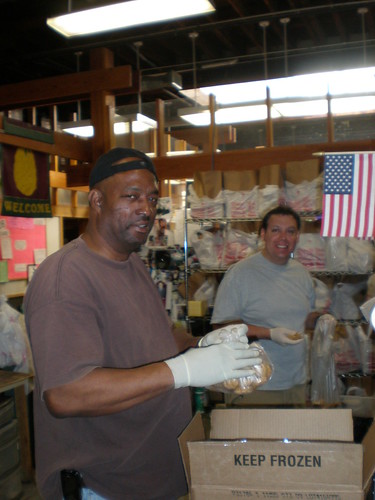
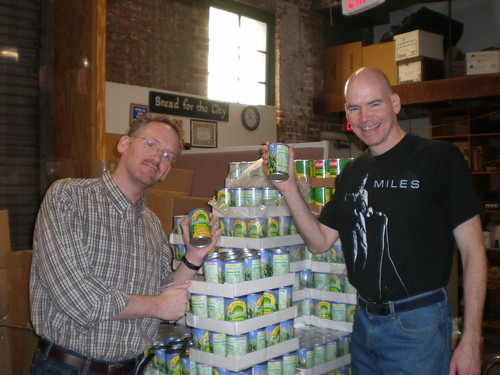
Input from our clients was and is essential in this process. Two surveys were administered to gauge client interests -- one in 2008, as the transition began, and one last month. During this second survey process, we've found some results that we'd like to share.
One of the most revealing questions was, "What item do you appreciate the most?"
In our recent survey, meat/chicken/fish had the highest frequency, receiving 101 responses, or 26 percent of the selections. That's to be expected - given the cost and societal value associated with meat in our society. However, this result reflects a decrease of 16 percentage points from our survey last year, when meat/chicken/fish received 42 percent of the responses. Though meat remains at the top of the list of our clients' preferences, we can our community has begun to take more interest in the variety of our other offerings.
In our 2009 survey, fresh fruit and vegetables came in as a close runner-up to the top choice of meat/chicken/fish with about 20 percent. But when we combine preferences of fresh or canned options, preference for fruit+veg rises to 36 percent -- higher than meat! Additionally, this statistic rose by 12 percent throughout the year, potentially because of the increase in fresh fruits and vegetables due to our gleaning program. (We must also note that this question’s format differed slightly from year to year, which likely affected the results to some degree.)
Another question that received interesting responses was, "Would you choose to get less meat/chicken/fish if you instead got a larger amount of food overall?"
Meat is the most expensive kind of item in our pantry, and our hope is that we could reduce the quantity of meat we purchase in order to purchase more of a variety of other items. At 55 percent, a majority of respondents circled “yes”: they would prefer less meat in exchange for more food, whereas 41 percent responded “no,” and 4 percent provided no response. These numbers are slightly different from 2008, in which 49 percent responded “yes,” 37 percent responded “no" (14 percent no response). The gap between “yes” and “no” widened by only 2 percentage points between 2008-2009 - but we are encouraged and will continue to look into the opportunity for more individual choice among the various items on our menu.
As an endnote, it was wonderful to receive many positive comments about the food pantry: “I really appreciate what you are doing for the people, thanks!”
Introducing the DC Food For All
 Last week, we helped launch a new collaborative project -- along with friends at the Capital Area Food Bank, DC Hunger Solutions, DC Central Kitchen, Social Compact, the Common Good City Farm, the Washington Urban Gardeners, and more.
The DC Food For All will chronicle the many efforts here in Washington DC to expand access to -- and demand for, and production of -- fresh, nutritious food. We hope it becomes a forum for the discussion of all things food, and that together we can make great progress towards a more equitable community food infrastructure.
Already in the first week, Bread for the City staffers have contributed a couple of great posts: one from Jeffrey Wankel about the Glean for the City project, and another from our Emerson Hunger Fellow Amy Johnson, about analyzing the feedback from our clients about changes in our food pantry. (Stay tuned for that to be posted here.)
You'll hear a lot more from us about this project. In the meantime, you can subscribe to the DC Food For All's RSS feed here, and you can follow it on Twitter and fan it on Facebook. And if you'd like to participate in the conversation among DC Food For All contributors about the direction this project will take, request to join the google group here. Stay tuned!
October 20, 2009
We Want $20,000!
 Glean for the City currently stands in third place in the Tom's of Maine 50 States for Good contest. This is great news, as the top five projects will receive $20,000!
Remember, you can vote every day until October 30th. So vote today -- and tomorrow, and the day after that, and the -- then tell your friends to do the same. Glean for the City needs this cash ... and our clients need the veggies.
September 24, 2009
Volunteer Spotlight: Parker Farms

Parker Farms started as a family owned "Pick Your Own" operation with two acres of vegetables and berries in 1974. Rod Parker still runs the family business as the General Manager, with his son working as the Field Manager. With headquarters in Oak Grove, Virginia, Parker Farms now handles over 3,200 acres of farmland in Maine, Maryland, Virginia, North Carolina, South Carolina, Georgia and Florida. Rod was a huge help in the planning process for Glean for the City, and gave us valuable information that allowed the program to really take off. He took time out of his hectic schedule to sit down and talk with Bread for the City about food waste and the gleaning process. (That's Rod talking to BFC Nutritionist Sharon Gruber.) He took a lot of guesswork out of running the program, and helped to prepare us to hit the ground running.
This year, with the help of Parker Farms, volunteers working with Glean for the City have collected nearly 30,000 total pounds of fresh produce. We will be back at Parker Farms in October to glean broccoli, and any interested volunteers should visit www.BreadfortheCity.org/gleanforthecity.
Thank you Rod Parker and Parker Farms for all that you do. We are proud to have you as our 2009 Fresh Food Partner.


 Posts
Posts


